
Master of Science In Biomedical Sciences
Discover Answers to Life’s Most Pressing Medical Questions
Where Curiosity Meets Clinical Impact
Are you driven to understand the science behind disease and health? As a student in Des Moines University Medicine and Health Sciences’ Master of Science in Biomedical Sciences program, you’ll be at the forefront of exploring the mechanisms that shape human health — and preparing to make a real difference in the world.
Whether your goal is clinical practice, research or academia, the MSBS program equips you with the knowledge and skills to thrive. You’ll dive deep into the biology of disease, learn to ask the right questions and gain hands-on experience investigating the answers.
Choose the path that fits your goals — the 12‑month non‑thesis track for a fast, focused experience or the 22‑month thesis track for in‑depth research and discovery. Students already enrolled in DMU’s Doctor of Osteopathic Medicine or Doctor of Podiatric Medicine programs may also pursue the MSBS as a dual degree.
No matter which track you choose, you’ll graduate ready to contribute to the search for cures, treatments and breakthroughs that matter.
2 Pathways
Thesis or Non-Thesis Track
$878
Tuition Per Credit Hour
8 : 1
Student-to-Faculty Ratio
1 : 1
Faculty Mentorship
Am I on Track for the MSBS Program?
A Quick Check. You Might Be More Prepared Than You Think.
Undergraduate Degree
A bachelor’s degree is required.
GPA
A minimum grade point average of 2.8 is recommended (cumulative and science).
Letters of Recommendation
A minimum of three references is required.
Optional Entrance Exams
Medical College Admission Test, Graduate Record Examination, Optometry Admission Test or Dental Admissions Test scores are accepted.
Choose Your Path
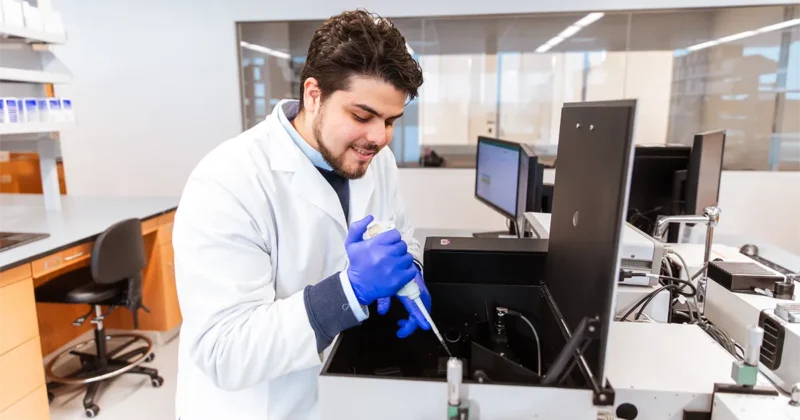
Complete your degree in as little as 12 months (non-thesis) or 22 months (thesis). Both options deepen your understanding of human disease and the science behind health.

Learn from the Experts
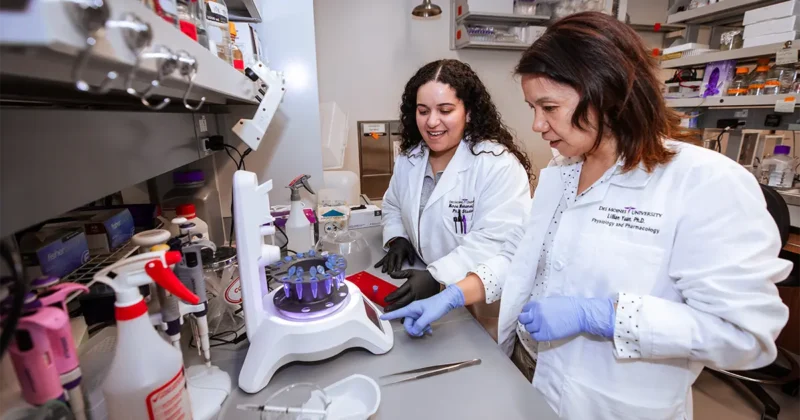
With an 8:1 student-to-faculty ratio, you’ll receive personalized guidance from faculty who are experts in their fields and invested in your success.
Strategic Preparation
You’ll be matched with a faculty advisor who will help you build your CV, prep for interviews and guide your professional development.
Lead in Discovery
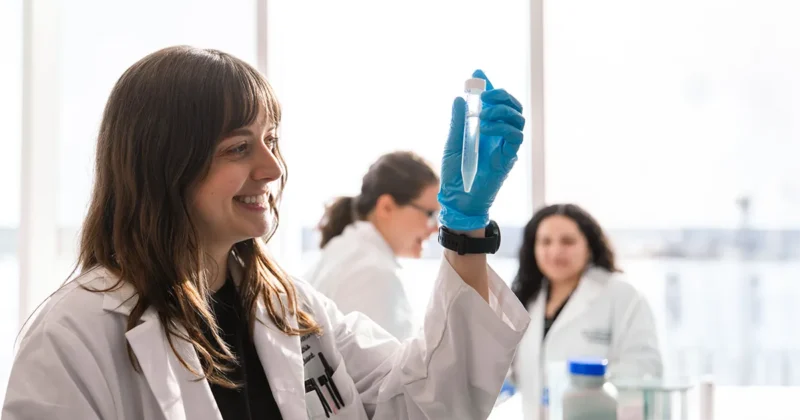
Conduct your own hypothesis-driven research and master lab techniques such as tissue isolation, cell culture, imaging and microbial propagation.
Specialize Your Future
You have big plans, and DMU’s Master of Science in Biomedical Sciences program is built to support them.
Choose the track that fits your goals:
- Non-Thesis Track
Blends coursework taken alongside medical students with research-based classes and hands-on research opportunities. This track is designed to meet a wide range of educational needs and prepare you for professional or academic advancement. - Thesis Track
Ideal for students seeking an in-depth exploration of a single research topic. This track culminates in a written thesis and an oral defense during the final term.
What You’ll Learn
DMU’s MSBS program combines foundational science with advanced graduate-level coursework to prepare you for careers in research, health care and beyond.
You’ll take courses in anatomy, biochemistry and physiology, along with specialized classes such as:
- Frontiers in Biomedical Research
- Scientific Communications
- Intro to Biostatistics and Data Analysis
In addition to coursework, you’ll complete a hypothesis-driven research project that builds your skills in scientific communication and lab techniques.
Quick Facts: Curriculum and Courses
-
Graduate-Level Science Foundation
Coursework that strengthens your foundation in human disease and biomedical science
-
Research-Driven Learning
Engage in active research in cancer, immunology, microbiology, virology and pharmacology
-
Quantitative and Analytical Training
Training in biostatistics, data analysis and professional scientific writing
-
Individualized Faculty Mentorship
Personal advising from research-active faculty committed to your academic and professional success
“Our students leave DMU with a solid grounding in biomedical science, practical research experience and the confidence to navigate complex scientific challenges.
They bring intellectual curiosity, professionalism and a commitment to improving human health to the workforce — qualities that make them strong candidates in competitive career and academic pathways.”
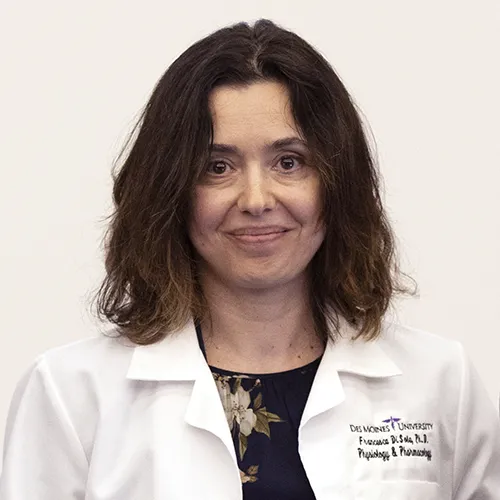
Francesca Di Sole, PhD
Professor and Director of the MSBS Program
Where Will Your MSBS Take You?
Ready. Set. Go.
Biomedical sciences drive medical innovation, from treating diseases to understanding human health. DMU’s Master of Science in Biomedical Sciences program prepares you to tackle complex scientific problems and take the next step toward medical school, doctoral study or research-focused careers.
Our MSBS graduates follow a wide range of paths, from admission to medical school and other health professions programs to careers as educators or investigators in academic institutions. Many also move into consultant or research positions in pharmaceutical and biotechnology industries and government labs.
Biomedical scientists earn a median annual salary of $100,590.*
Learn here. Succeed everywhere.
*Source: U.S. Bureau of Labor Statistics
Quick Facts: Non-Thesis and Thesis Pathways
-
32 Credits
Required for the MSBS non-thesis track
-
46 Credits
Required for the thesis MSBS track
-
12 to 22 Months
Time to complete the MSBS, depending on your chosen track
Feel the Connection
When you’re not in class, training in the field or studying for exams, there’s no shortage of ways to get involved on campus and beyond.
- Join one of 50+ student clubs and organizations to connect with peers and build community.
- Get involved with the Office of Diversity and Multicultural Affairs to build the cultural intelligence and communication skills needed to thrive in diverse workplaces.
- Explore everything the Greater Des Moines community has to offer, from cultural events to outdoor activities and local favorites.


The Stories That Define DMU

Life After DMU: Life of a … Scientist
As the first student in DMU’s Biomedical Sciences PhD program, Elizabeth McConnaha, PhD’25, helped shape the curriculum and now teaches others.

Life After DMU: Life of a … Master of Science in Biomedical Sciences
Austin Teel, DO’24, MSBS’20, found that a Master of Science in Biomedical Sciences was the perfect stop on his path to becoming a doctor.
DMU and Baylor University Partner to Create Health Sciences Pathways
Des Moines University Medicine and Health Sciences and Baylor University, a private university in Waco, Texas, have announced a partnership designed to expand educational pathways for Baylor students interested in pursuing graduate-level health sciences degrees.
Become Who You’re Meant to Be
Earn your MSBS from DMU and step into your career with confidence and purpose.