
Master of Science In Anatomy
Master the Human Body. Shape the Future of Care.
Discover What Makes Us Human
Your future in health sciences starts with anatomy.
Whether you’re preparing for a career in allied health, academic teaching or research, a strong foundation in human anatomy helps you stand out. At Des Moines University Medicine and Health Sciences, our Master of Science in Anatomy program builds expertise in the medical and translational sciences — preparing you to advance patient care, teaching and scientific discovery.
Choose a thesis or non-thesis track aligned with your professional goals. Students already enrolled in DMU’s Doctor of Osteopathic Medicine or Doctor of Podiatric Medicine programs may also pursue the MSA as a dual degree.
This is more than a degree. It’s preparation in the anatomical and health sciences.
2 Years
Program Length
$878
Tuition Per Credit Hour
9 : 1
Student-to-Faculty Ratio
2 Pathways
Thesis or Non-Thesis Track
Am I on Track for the MSA Program?
A Quick Check. You Might Be More Prepared Than You Think.
Undergraduate Degree
A bachelor’s degree is required.
GPA
A minimum 2.8 grade point average is recommended (cumulative and science).
Letters of Recommendation
A minimum of three references is required.
Optional Entrance Exams
Medical College Admission Test, Graduate Record Examination or Dental Admissions Test scores are accepted. Scores must be less than three years old.
Why DMU?
With thesis and non-thesis pathways, DMU’s Master of Science in Anatomy program offers meaningful opportunities to teach, conduct research and expand your professional preparation within a comprehensive health sciences environment.
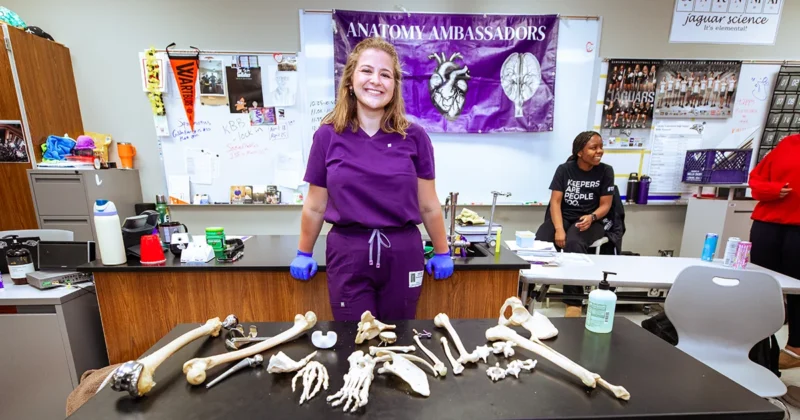
Teach Anatomy With Confidence
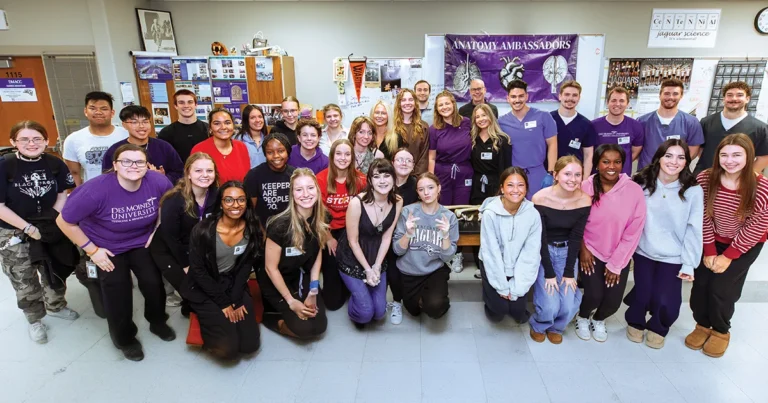
Provide organ demonstrations and gain teaching experience with audiences ranging from young children to undergraduate students through DMU’s Anatomy Ambassadors Program.

Develop Applied Anatomical Skills
Serve as a gross anatomy dissection teaching assistant while strengthening presentation skills and collaborating with students in DMU’s health professions programs.
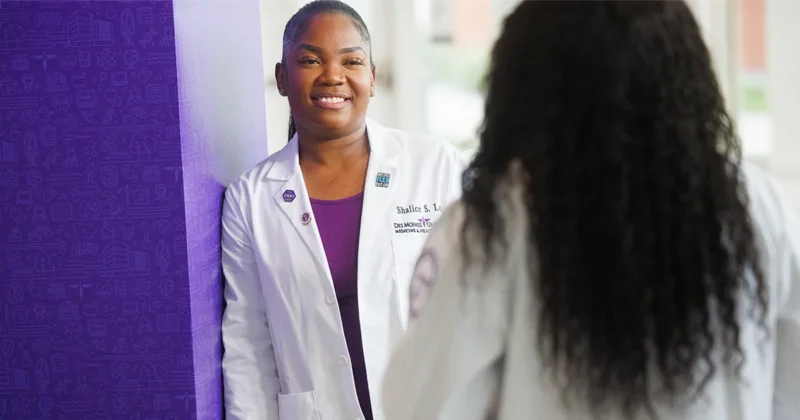
Dual Degree Options
Students enrolled in the Doctor of Osteopathic Medicine or Doctor of Podiatric Medicine programs may pursue the MSA as a dual degree to broaden professional opportunities.
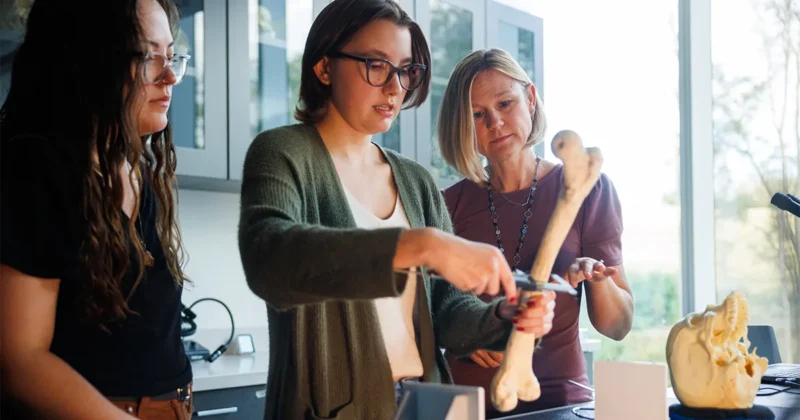
Lead in Discovery
Participate in active, faculty-guided research projects that deepen expertise and support discovery in anatomical sciences.
Labs That Launch
As a Master of Science in Anatomy student at Des Moines University Medicine and Health Sciences, you’ll study in a state-of-the-art anatomy lab designed for immersive, hands-on learning and advanced digital instruction. This technology-rich environment supports cadaver-based education and real-time collaboration.
Features of DMU’s anatomy lab include:
- Computer-aided instruction using Microsoft Surface Pro tablets and 55-inch monitors at 32 dissection stations
- Integrated dissection guidance through the online Anatomy Dissection Manual
- A “Live Eye-in-the-Sky” video system that streams real-time demonstrations to each station and supports virtual presentations
- Access to video files for lab orientations and reviews, plus CT/MRI imaging, plain film radiographs and 3D anatomical reconstructions
- Advanced digital tools that enhance your understanding and prepare you for how anatomy is applied in modern medical practice
What You’ll Learn
As an MSA student at DMU, you’ll build a comprehensive understanding of human structure — from cells to organ systems — within a rigorous, clinically relevant curriculum. You’ll choose the track that aligns with your goals:
- Non-Thesis Track
Ideal for students preparing for medical or allied health professions, academic teaching or further graduate study. This track culminates in a capstone experience.
- Thesis Track
Designed for students pursuing research-focused careers in comparative and evolutionary anatomy or planning to continue to a research-based PhD.
No matter which track you choose, coursework develops comprehensive knowledge in gross anatomy, cell and tissue biology, neuroanatomy and human development.
Quick Facts: Curriculum and Courses
-
Advanced Anatomical Training
Build expertise for careers in allied health, teaching or research
-
Comprehensive Foundational Sciences
Study gross anatomy, human development and related biomedical disciplines
-
Hands-On Anatomy Laboratory Learning
Develop important skills through human donor-based study
-
Faculty Mentorship and Academic Advising
Learn from nationally recognized faculty who serve as your personal academic advisors
“Our MSA program is ideal for students seeking a hands-on understanding of human structure and its clinical relevance. At DMU, students learn through human donor-based study, close mentorship from respected, research-active faculty and opportunities to contribute to anatomical education and scholarship.
This immersive foundation in anatomy, teaching and scientific inquiry prepares graduates to excel in medical school, podiatric and exercise science, other health professions or advanced doctoral study in the anatomical sciences.”

Muhammad Spocter, PhD
Director of the MSA Program and Professor of Anatomy
Where Will Your MSA Take You?
Ready. Set. Go.
Whether you choose the thesis or non-thesis track in DMU’s Master of Science in Anatomy program, you’ll open the door to a range of career possibilities. Many anatomy-related professions show strong projected job growth, and some graduates continue their education in medical, health professions or doctoral programs.
Others move directly into the workforce, applying their expertise in health‑related roles such as clinical, laboratory or medical examiner positions, as well as in teaching and research roles at colleges, universities and research organizations.
Professionals in anatomy-related research and teaching careers earn competitive salaries. For example, medical scientists report a median annual wage of about $100,000.*
Learn here. Succeed everywhere.
*Source: U.S. Bureau of Labor Statistics
Quick Facts: Thesis and Non-Thesis Pathways
-
42.5 Credits
Required for graduation in the Master of Science in Anatomy program
-
Non-Thesis Track
Medical-school-aligned coursework with extensive teaching experience
-
Thesis Track
Scientific writing, research methods and scholarly investigation
“The MSA program is a hidden gem for anyone aiming for advanced education, anatomical research or a future in health care.
The faculty consistently go above and beyond, and master’s students gain unparalleled access to donors, research and learning experiences. That exposure gave me the preparation and confidence I needed to successfully matriculate into medical school.”

Matthew Brooke, MSA’22, DO’26
“I chose to pursue an MSA at DMU to strengthen my academic foundation and become a more competitive applicant for medical school.
The program’s reputation for rigor and its emphasis on human anatomy created the ideal environment to challenge myself, deepen my understanding of the body and build the skills necessary for medical school.”
Juan Portal Figueroa, MSA’25, DO’29
“I credit the MSA program for showing me what teaching is — and what it can be. Teaching is my passion and the program helped me feel confident that I could manage a rigorous course load and high expectations.
The MSA program lets you explore your interests and decide where to focus your energy as you move forward.”

Keely Cassidy, MSA’11, PhD
Associate Professor of Genetics, Cell Biology and Anatomy,
University of Nebraska Medical Center College of Medicine
Feel the Connection
When you’re not in class, training in the field or studying for exams, there’s no shortage of ways to get involved on campus and beyond.
- Join one of 50+ student clubs and organizations to connect with peers and build community.
- Get involved with the Office of Diversity and Multicultural Affairs to build the cultural intelligence and communication skills needed to thrive in diverse workplaces.
- Explore everything the Greater Des Moines community has to offer, from cultural events to outdoor activities and local favorites.
Connect With the MSA Program


The Stories That Define DMU

DMU Researcher Publishes Two Studies On the Extinct American Cheetah-Like Cat
Julie Meachen, PhD, professor of anatomy at Des Moines University Medicine and Health Sciences, recently published two studies on the American cheetah-like cat, Miracinonyx trumani.
Become Who You’re Meant to Be
Earn your MSA from DMU and step into your career with confidence and purpose.