
Elizabeth “Libby” Abbas, DO’15
A Different Kind of Risk
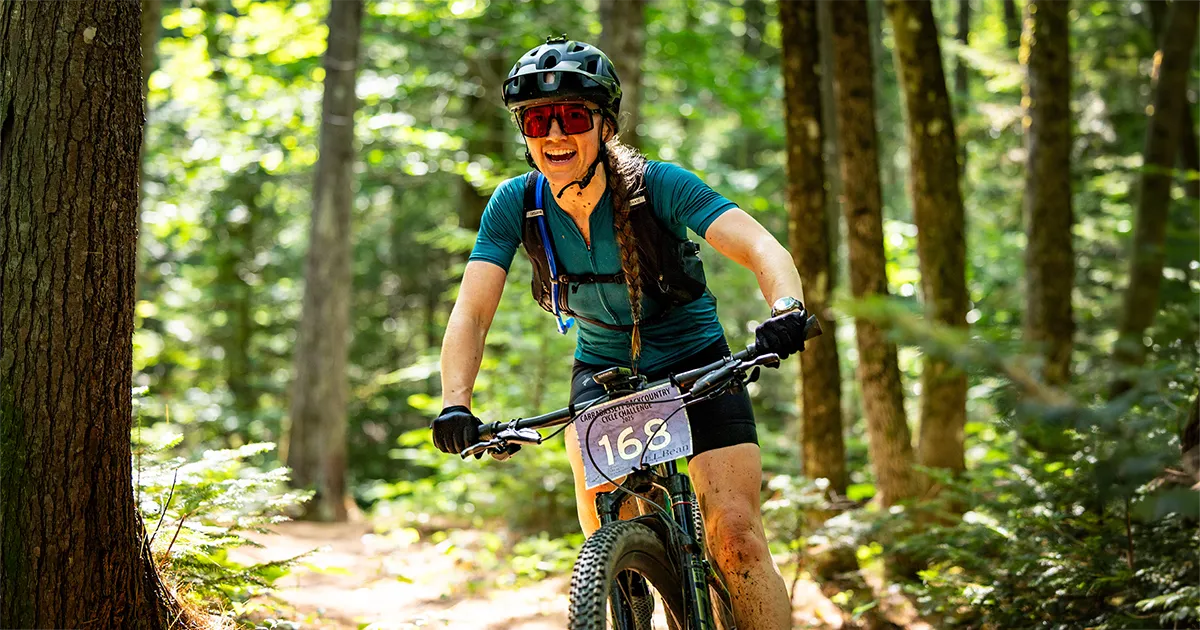
She bikes down technical trails, races skijoring with her Doberman and rides a mountain bike unicycle — just to see if she can.
Libby Abbas, DO’15, is not afraid of risk.
Now she’s taking on a different kind: launching a family medicine residency in a one-stoplight town in western Maine.
For Abbas, her work is a calling.
“I initially thought my dream job was just going to be sitting one-to-one with my patients for the next 30 years,” she says. “But there are not enough doctors to do that. The only way to change that is to teach others what I do.”
Abbas is DMU’s 2026 Rising Star Alumna of the Year.
Elizabeth “Libby” Abbas, DO’15
A Different Kind of Risk
She bikes down technical trails, races skijoring with her Doberman and rides a mountain bike unicycle — just to see if she can.
Libby Abbas, DO’15, is not afraid of risk.
Now she’s taking on a different kind: launching a family medicine residency in a one-stoplight town in western Maine.
For Abbas, her work is a calling.
“I initially thought my dream job was just going to be sitting one-to-one with my patients for the next 30 years,” she says. “But there are not enough doctors to do that. The only way to change that is to teach others what I do.”
Abbas is DMU’s 2026 Rising Star Alumna of the Year.
From Rural Roots
Abbas understands rural health care because she grew up living it.
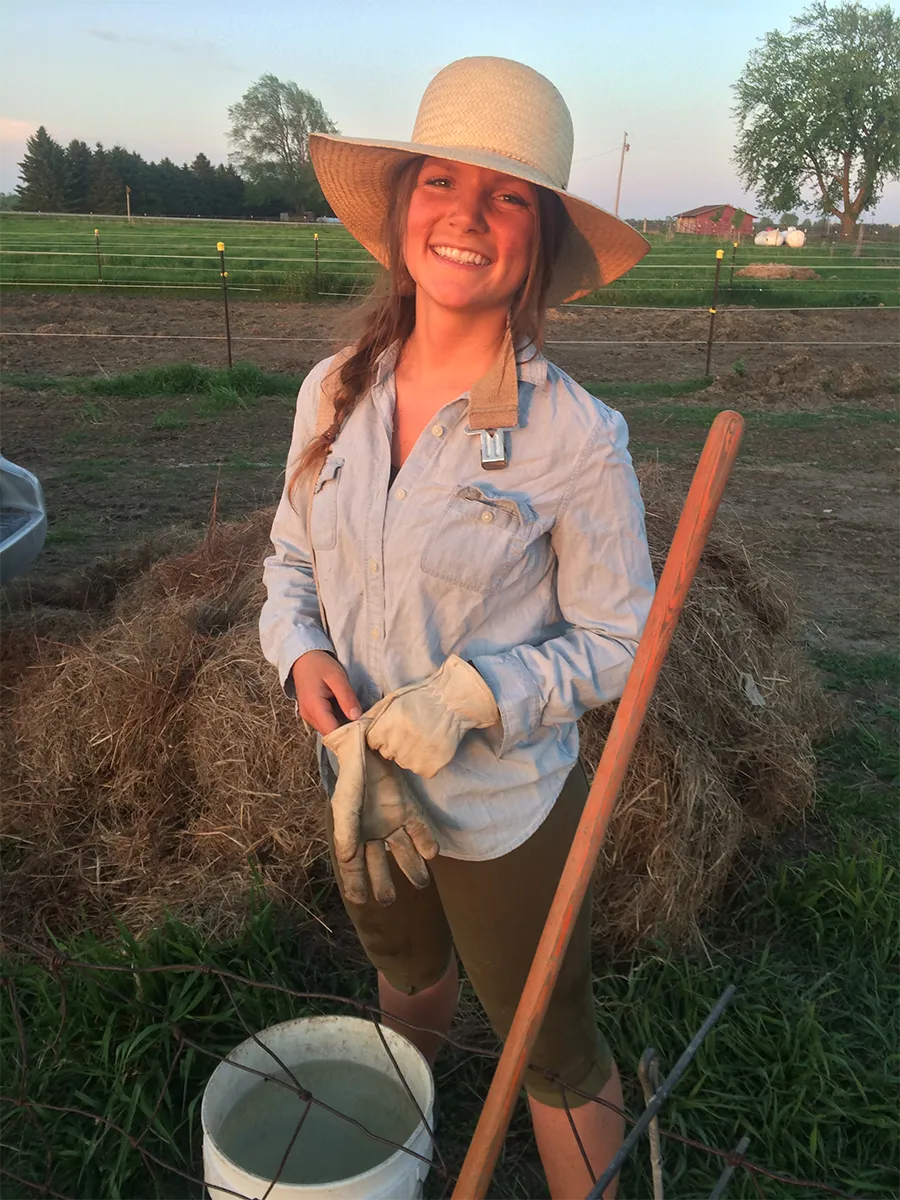
She was raised on a small organic sheep farm in northeast Iowa, outside the town of Tripoli.
Visits to the doctor were rare.
“We didn’t go very often,” she recalls. “The closest doctor was more than an hour away, and sometimes we didn’t have gas money to get there.”
Life on the farm instilled a work ethic early. Animals had to be fed, sheep sheared and chores finished before school.
Her mother was an organic farmer, horse jockey and fiber artist. Her father worked as an auto mechanic. Every year for Halloween, he dressed as a giant blue bear — Abbas’s childhood imaginary friend — and took her trick-or-treating.
At her DMU graduation, he wore the costume again.
Only then did she realize that Big Blue had been her dad all along.
Those experiences shaped how she sees medicine today.
“If you didn’t grow up in a rural community, it’s hard to understand the barriers,” Abbas says. “Access to care isn’t just about having a doctor. It’s about distance, transportation and time.”
Discovering Osteopathic Medicine
After graduating from Tripoli High School in a class of 36 students, Abbas attended the University of Northern Iowa to study biology.
Medical school was always the goal. A drawing she made in kindergarten of a doctor’s bag hangs in her office today. Her mother saved it for decades before framing it and giving it to Abbas when she graduated from DMU.
But Abbas didn’t initially know about osteopathic medicine.
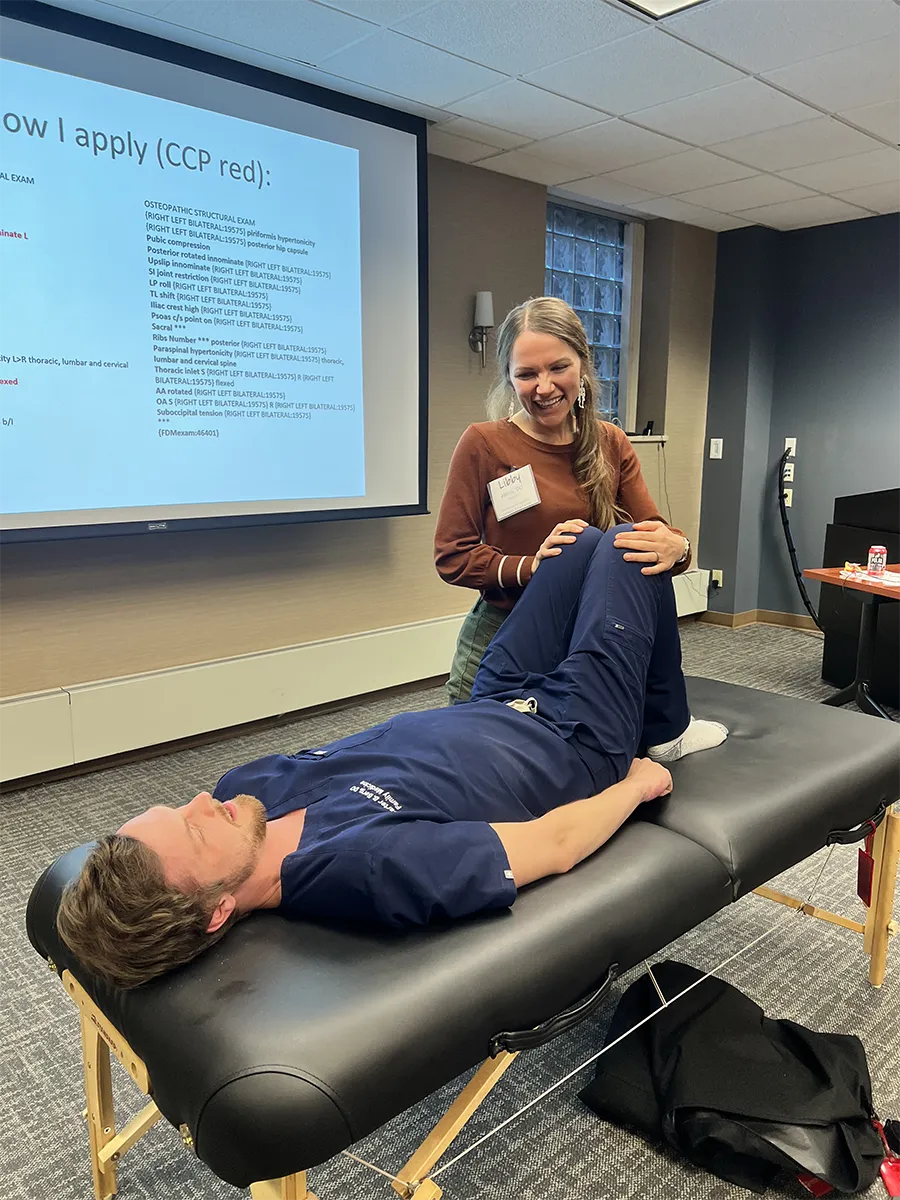
A friend convinced her to tour DMU. During that visit, Abbas watched a demonstration of osteopathic manipulative medicine.
“I saw them working with their hands on the table and thought, ‘This has to be part of my life,’” she says.
She enrolled at DMU and quickly immersed herself in the profession. Abbas became an OMM pre-doctoral fellow and earned a Rural Medicine Education Pathway scholarship, committing her to serve underserved communities after graduation.
She also discovered a passion for teaching.
One mentor was Sally Sutton, DO’53, a DMU Pioneer of Osteopathic Medicine who hosted students for small-group OMM instruction at her home.
“She’d make us lunch and teach us manipulation,” Abbas recalls. “That experience really shaped me.”
“I went into residency feeling like I had strong clinical skills and a really solid foundation,” she says.
Finding Joy in Teaching
After completing her family medicine residency in Maine, Abbas returned to the Midwest to practice full-spectrum family medicine in rural Iowa.
Once a month, she drove 90 minutes to precept residents at a family medicine program.
“My first day with residents was life-changing,” she says. “I realized my career had to involve teaching.”
That realization eventually led her to join the faculty at the Gundersen Family Medicine Residency in La Crosse, Wisconsin.
There, Abbas helped develop an addiction medicine and OMT service through a mobile clinic serving unhoused patients. The program filled an important gap and gave medical residents hands-on experience working with patients facing complex challenges.
A New Chapter in Maine
In 2025, Abbas and her husband returned to Maine. The two originally met during Abbas’ residency at a bike workshop he was teaching on how to replace flat tires.
When Abbas saw an opening for a residency program director in Farmington, she jumped at the opportunity.
Farmington is a small mountain town with a single traffic light. Its hospital — MaineHealth Franklin Hospital — is a critical access facility serving a large rural region. The next hospital is about an hour away.
For Abbas, the setting feels familiar.
“This community reminds me a lot of where I grew up,” she says.
As the founding program director of the Franklin Rural Family Medicine Residency, Abbas is building a program designed to train physicians who can practice broad-scope rural medicine. The plan is to welcome two residents in 2027 and eventually grow to six.
Doug Smith, MD, Franklin’s chief medical officer, says Abbas is uniquely suited for the role.
“Her energy is infectious,” he says. “I can’t think of a better person to lead this program.”
“The number one factor in where physicians practice is where they train,” he adds. “If we expose residents to rural medicine, they may choose to stay in communities like this.”
The Doctor Who Teaches
For Abbas, teaching happens everywhere.
She teaches residents, medical students and patients — often through small moments.
She brings a harmonica to the clinic to break the ice with patients. She also creates balloon animals, a skill she learned during a medical school rotation with children experiencing homelessness.
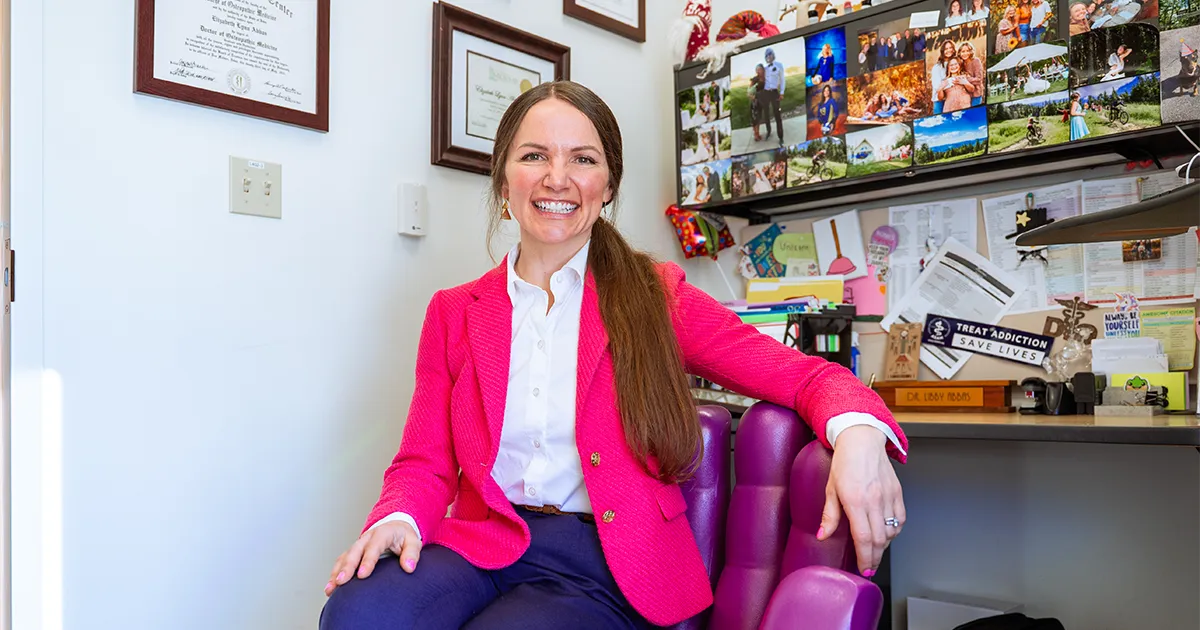
Her office reflects the same energy.
Stuffed animals help demonstrate osteopathic manipulative medicine techniques. A sock monkey she practiced on during medical school sits nearby. Unicorns — her favorite symbol — appear throughout her office, including one crocheted by a grateful patient.
One of the most meaningful pieces in her office is a painting created by a patient after she helped resolve a long-standing health issue.
“It’s a reminder of the impact you can make,” Abbas says.

A Life Outside the Clinic
When Abbas isn’t caring for patients or building a residency program, she’s outside.
She and her husband own a 170-acre mountain property where they build bike trails, camp and watch wildlife via a game camera that regularly captures moose, bears and bobcats.
Her Doberman, Princess Penelope (a.k.a. Nellie), accompanies her on many adventures. The two even compete in skijoring races — a winter sport where a dog pulls a skier.
Abbas is also a yoga instructor and endurance athlete who ran marathons during her time at DMU. Now she mountain bike races. The adventures help her sustain the demanding work of medicine.
“You are your own first patient of the day,” she says. “You have to take care of yourself if you want to take care of others.”
A Rising Star
Abbas has already been recognized for her work in rural medicine and medical education. But she believes her most meaningful accomplishment still lies ahead.
“My greatest work achievement is yet to come,” she says. “I hope it’s creating this residency program.”
If successful, the program will train physicians who practice in rural communities across Maine and beyond.
Launching a residency program in a one-stoplight town might look like a risk. But Abbas has never been afraid of a steep climb — especially when the communities that need physicians most are waiting at the top.
John T. Pham, DO’00, FACOFP
Leading With Care
Chăm sóc. In Vietnamese, it means to take care of someone.
It’s not a grand gesture. Or a declaration. It is showing up — quietly, consistently and without being asked. It is rooted in more than 2,000 years of Confucian philosophy that shaped Vietnamese culture: love expressed not through words, but through presence. Through sacrifice. Through service.
This is the world that John T. Pham, DO’00, FACOFP, grew up in.
And it is how he leads.
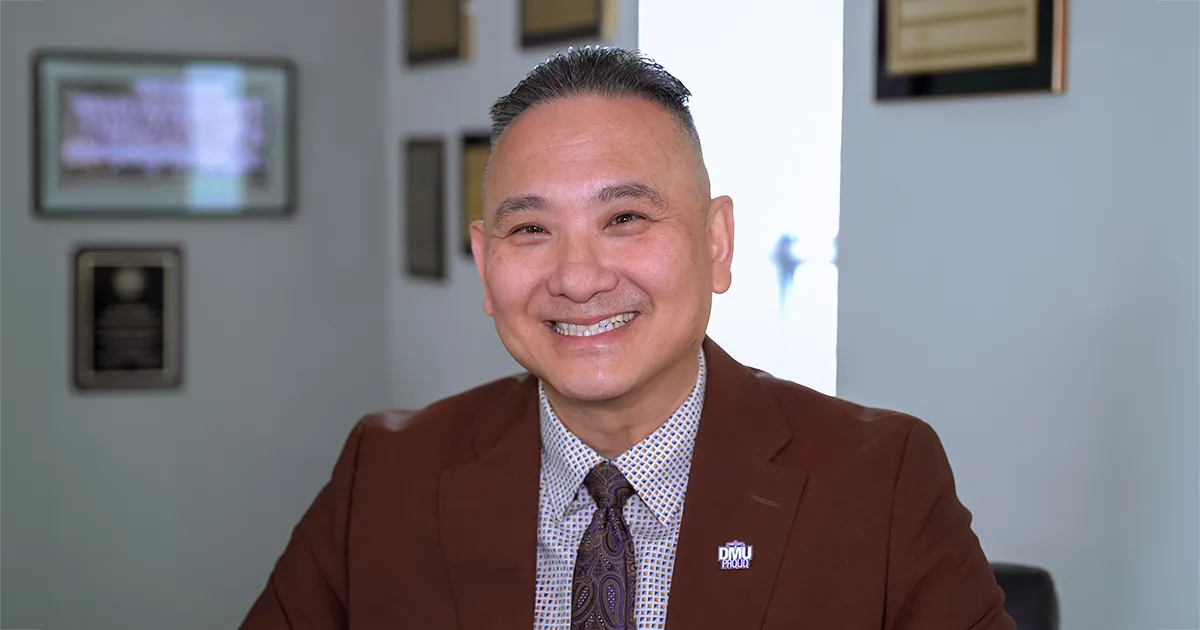
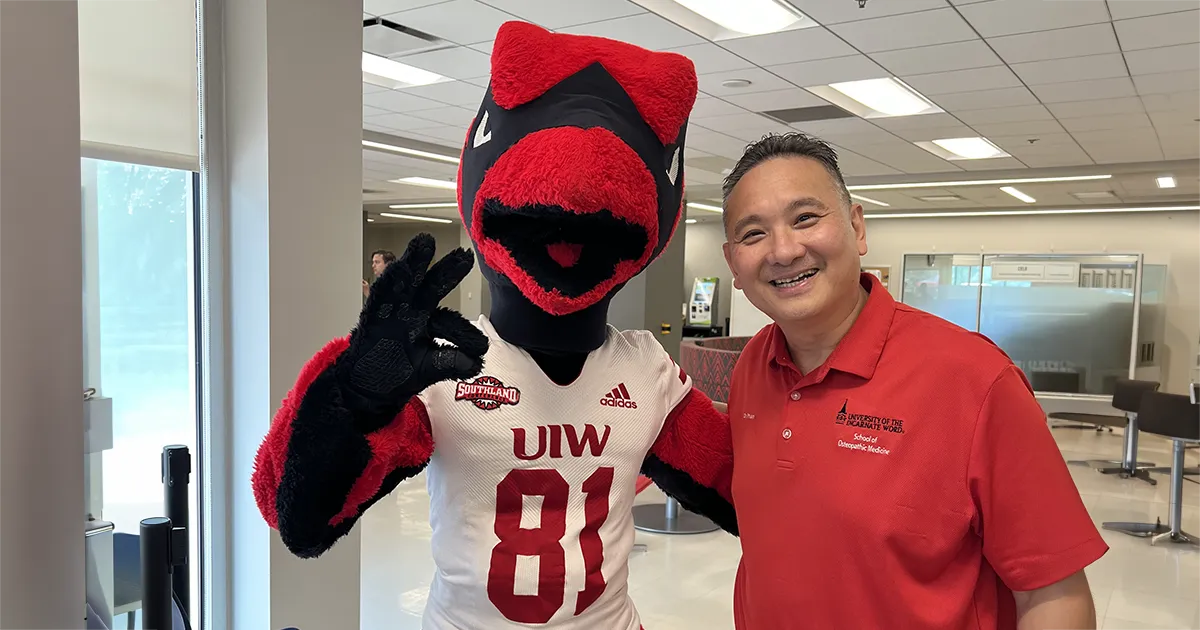
On a sun-drenched sidewalk outside his administrative building on the University of the Incarnate Word School of Osteopathic Medicine campus in San Antonio, Texas, the dean spots a group of students walking by.
Just steps away, in 1963, President John F. Kennedy dedicated the School of Aerospace Medicine at Brooks Air Force Base — now home to Pham’s medical college.
Many leaders would keep moving.
Pham stops.
“Hi, boys.”
“Hello, sir.” The group slows, then halts.
“What are you up to?”
“We just left a leadership meeting,” one says. Most of the group plans to become orthopedic surgeons. All of them are wearing cowboy boots. None of them seems to be in a hurry to leave.
Neither does he.
This is John T. Pham: the first and only Vietnamese American dean of a medical school in the United States (osteopathic or allopathic) — and the kind of leader who earns high fives in the hallway and impromptu sidewalk conversations with busy medical students.
It is exactly why Pham is the 2026 Alumnus of the Year for DMU’s College of Osteopathic Medicine.
John T. Pham, DO’00, FACOFP
Leading With Care
Chăm sóc. In Vietnamese, it means to take care of someone.
It’s not a grand gesture. Or a declaration. It is showing up — quietly, consistently and without being asked. It is rooted in more than 2,000 years of Confucian philosophy that shaped Vietnamese culture: love expressed not through words, but through presence. Through sacrifice. Through service.
This is the world that John T. Pham, DO’00, FACOFP, grew up in.
And it is how he leads.
On a sun-drenched sidewalk outside his administrative building on the University of the Incarnate Word School of Osteopathic Medicine campus in San Antonio, Texas, the dean spots a group of students walking by.
Just steps away, in 1963, President John F. Kennedy dedicated the School of Aerospace Medicine at Brooks Air Force Base — now home to Pham’s medical college.
Many leaders would keep moving.
Pham stops.
“Hi, boys.”
“Hello, sir.” The group slows, then halts.
“What are you up to?”
“We just left a leadership meeting,” one says. Most of the group plans to become orthopedic surgeons. All of them are wearing cowboy boots. None of them seems to be in a hurry to leave.
Neither does he.
This is John T. Pham: the first and only Vietnamese American dean of a medical school in the United States (osteopathic or allopathic) — and the kind of leader who earns high fives in the hallway and impromptu sidewalk conversations with busy medical students.
It is exactly why Pham is the 2026 Alumnus of the Year for DMU’s College of Osteopathic Medicine.
From Refugee to Physician
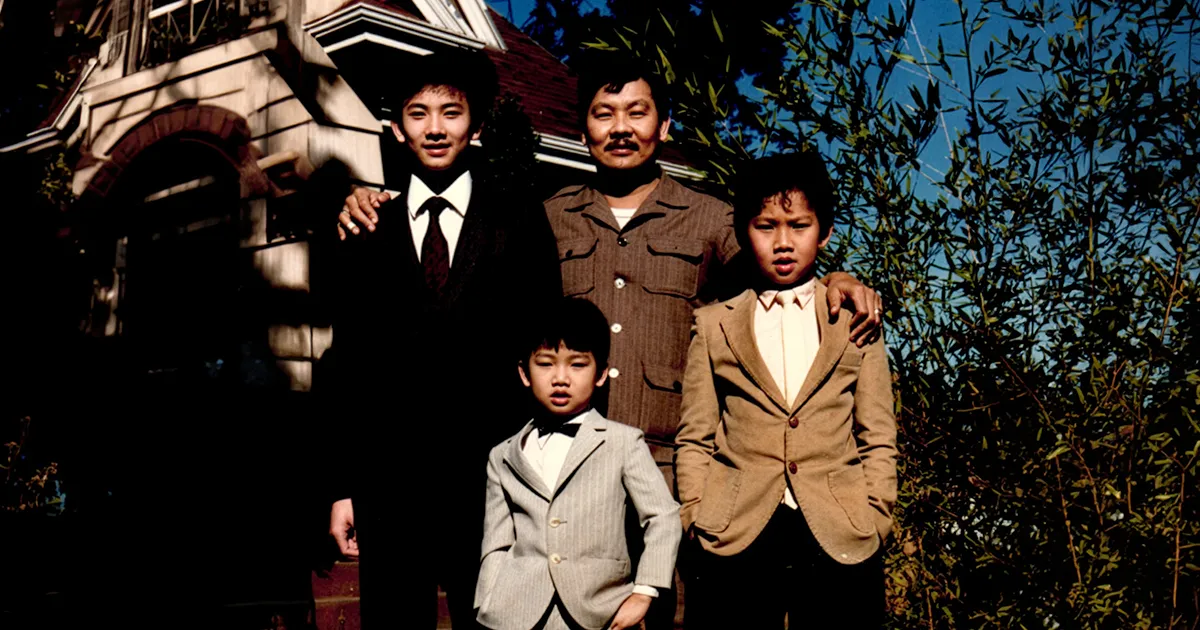
In 1975, as the Vietnam War ended, Pham’s family fled the country. His father had been a fighter pilot in the South Vietnamese Air Force, which made remaining in Vietnam after the war extremely dangerous for the family.
“We had to escape,” Pham says.
The family arrived in the United States with very little. They initially landed in California, then were sponsored by Catholic Charities and relocated to Portland, Oregon.
“My parents came here empty-handed,” Pham says. “Just a few bucks and their children. We had to start over.”
His father took odd jobs. His mother worked for a bank. Eventually, the family found an unexpected way to build a livelihood. At Portland’s Saturday Market, a bustling open-air market where vendors sell handmade goods and food, Pham’s parents began selling Vietnamese egg rolls.
“I think my parents didn’t believe in child labor laws,” Pham jokes. “We worked at a very young age.”
By age 5, Pham was helping prepare ingredients, rolling egg rolls and working behind the stand.
It was a family operation that lasted more than three decades.
“That’s where I learned hard work,” he says. The lesson stayed with him.
The DMU Opportunity
Pham attended Oregon State University, majoring in biology and minoring in chemistry. But getting into medical school was not guaranteed.
His test scores were not perfect, and as a first-generation student navigating the admissions process, the path forward was uncertain.
Then Des Moines University gave him a chance.
“DMU gave me an opportunity to become a physician,” Pham says. “I’m so grateful to this day for that opportunity.”
Leaving Oregon meant heading somewhere entirely new for the first time since he was a child.
“To go to cold Iowa,” he says with a laugh.
He graduated from DMU in 2000 and returned to Oregon for family medicine residency training.
Serving His Community
After residency, Pham had multiple offers to join established medical groups. He chose to open his own solo family medicine practice in Portland.
“I wanted to serve my community,” Pham says. “In the Vietnamese community in Portland, there were not a lot of Vietnamese doctors who could speak the language to take care of the patients.”
Fluent in Vietnamese, he spent the next decade caring for first- and second-generation Vietnamese families.
At the same time, another calling was taking shape. Students frequently rotated through his clinic. Even though teaching slowed down a busy practice, he welcomed them.
“We have to pay it forward,” he explains.
Paying it Forward
Pham’s sense of responsibility to mentor the next generation came from a promise he made to himself years earlier.
“I prayed and said, ‘God, give me a chance. Let me become a physician, and then I will pay it forward,” he says.
Academic medicine became the way for him to fulfill that promise.
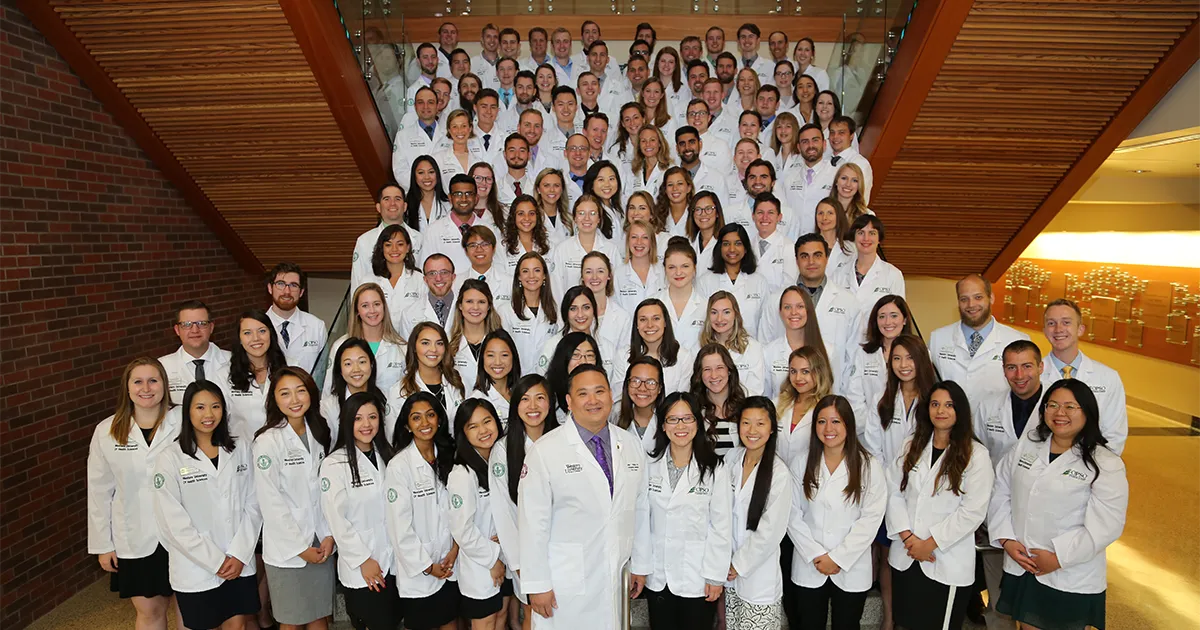
Pham began his academic medicine career at Western University of Health Sciences in 2011, joining its College of Osteopathic Medicine of the Pacific Northwest as a clinical skills faculty member. He advanced through academic leadership roles, serving as chair of family medicine and assistant dean before becoming vice dean in 2018. During that time, he worked closely with DMU’s current osteopathic dean, David Connett, DO, FACOFP (dist.), and the two served concurrently as vice deans for four years.
“He was a great mentor to me,” Pham says.
Leaving his medical practice was difficult. But he also realized the scale of the opportunity.
“I had about 2,000 patients in my panel,” he says. “If I train 100 students a year, and they go out and take care of 2,000 patients each, that’s 200,000 patients that can be impacted.”
A Dean Who Shows Up
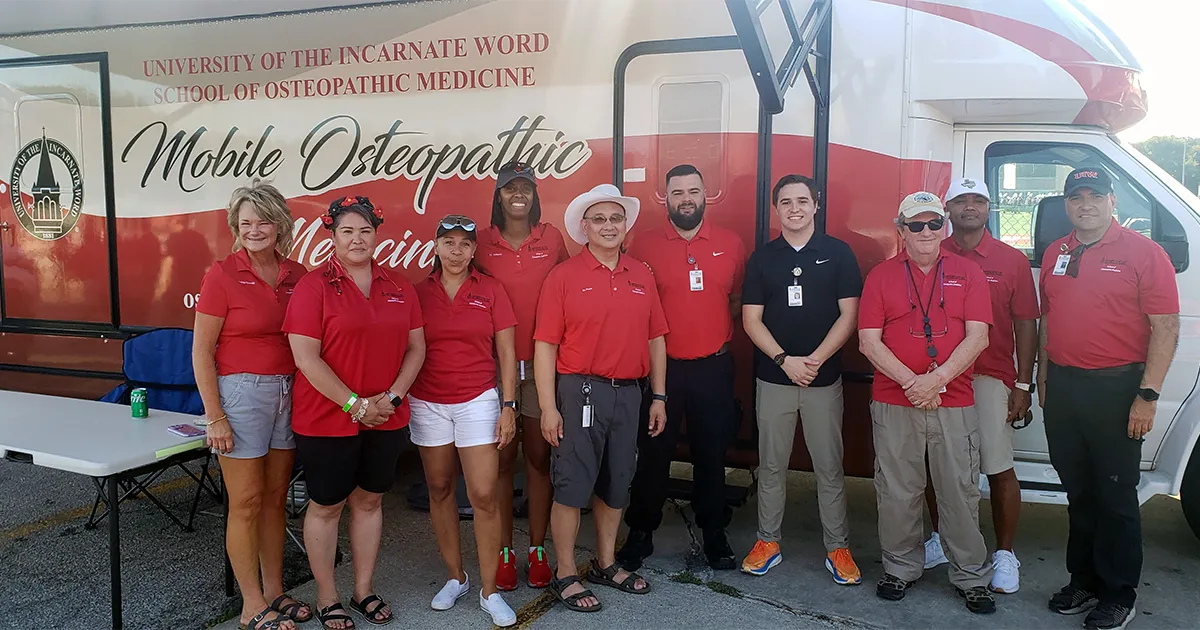
Today, Pham serves as dean and chief academic officer at UIW in Texas, which opened in 2017. He’s the university’s second dean.
Colleagues say his leadership style is defined by energy, clarity and accessibility.
“Dean Pham is very exciting to work with,” says Earlanda Williams, PhD, senior associate dean of academic affairs and professor of anatomy at UIW. “He has an exuberant personality and is very straightforward. You know right off the cuff what he wants.”
That transparency, Williams says, aligns the institution around a shared mission.
“There’s no ambiguity about what the goals are,” she says. “Everybody can be on the same page about how to accomplish them.”
Pham’s leadership has helped expand clinical partnerships for the medical school and strengthen opportunities for student training. His presence is also felt in the university’s hallways.
“He’s constantly here,” Williams says. “He’s invested in the future of our students and walking the walk to show them, ‘I’m here. I’m walking this with you.’”
The Moments That Matter
For Pham, the most meaningful days of the academic year are the moments when students take the next step in their journey.
“To me, the two most important days are Match Day and graduation,” he says.
Match Day represents years of sacrifice finally paying off.
“It is the culmination of all the hard work and sweat equity students put in,” he says.
Graduation is even more meaningful.
“That’s the day when I get to call them doctor,” he smiles.
For Pham, that’s the ultimate fulfillment of the promise he made long ago — showing up for the next generation of physicians, quietly, consistently and without fanfare.
Chăm sóc.
Jeffrey Dikis, DPM’12
Entirely Committed
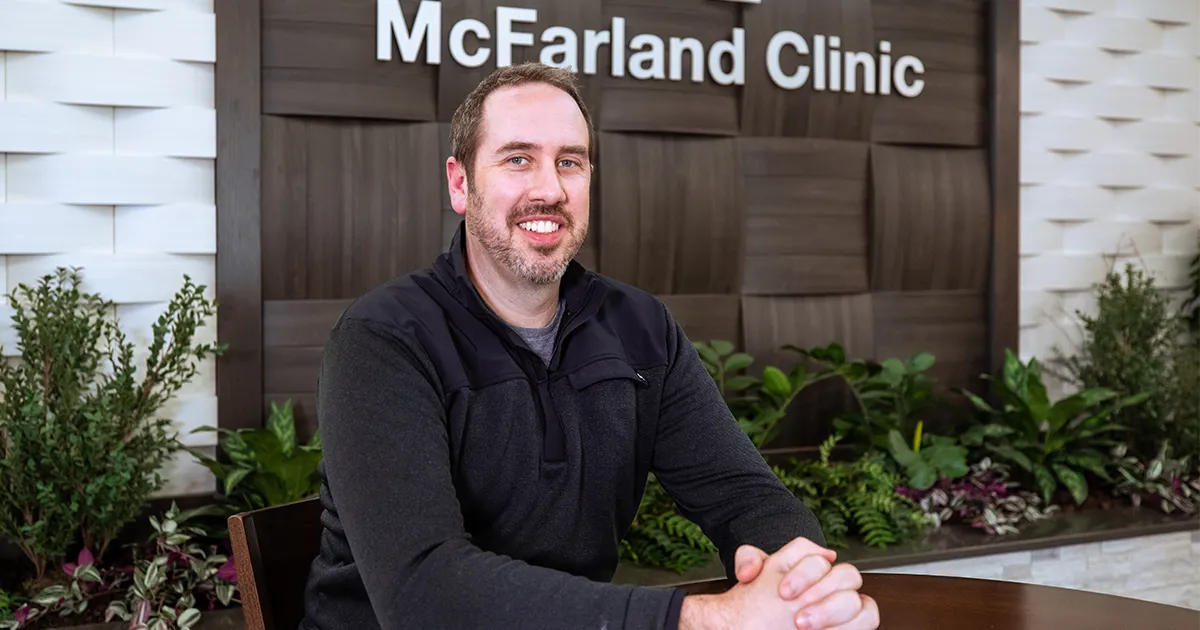
Jeffrey Dikis, DPM’12, has the energy of someone who genuinely loves every job on his plate.
He’s the kind of doctor who somehow has time for everything — and then finds more.
And every single day, without apology, he drinks Diet Mountain Dew.
He likes how it tastes.
Mountain Dew has always marketed itself as the outlaw of beverages — bold, disruptive and high-adrenaline.
The bad boy of the soda aisle.
But approachable.
A glowing, neon beacon for adventure.
Does that only describe Mountain Dew — or Jeff Dikis, too?
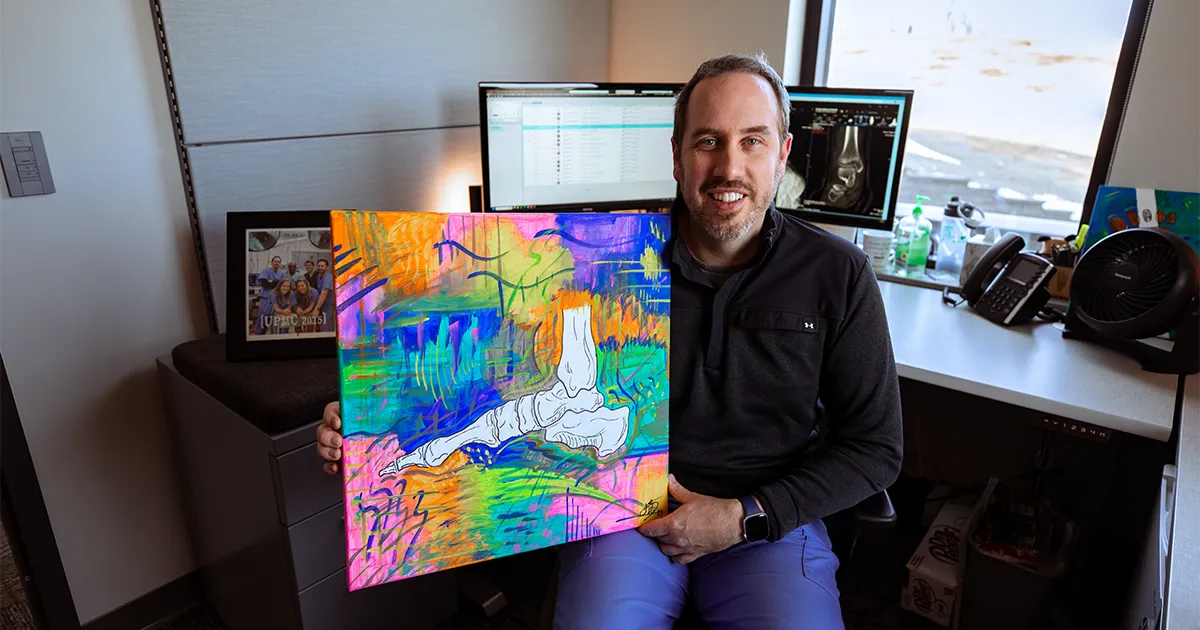
His high energy, fueled in part by Diet Dew, allows Dikis to fill more roles than most people attempt in a lifetime. Father. Husband. Podiatrist. Coach. Mentor. Artist. Podcaster. National speaker. Social media influencer. Two-time high school state tennis champion.
He doesn’t do anything halfway.
Dikis is the 2026 Alumnus of the Year for DMU’s College of Podiatric Medicine and Surgery.
Jeffrey Dikis, DPM’12
Entirely Committed
Jeffrey Dikis, DPM’12, has the energy of someone who genuinely loves every job on his plate.
He’s the kind of doctor who somehow has time for everything — and then finds more.
And every single day, without apology, he drinks Diet Mountain Dew.
He likes how it tastes.
Mountain Dew has always marketed itself as the outlaw of beverages — bold, disruptive and high-adrenaline.
The bad boy of the soda aisle.
But approachable.
A glowing, neon beacon for adventure.
Does that only describe Mountain Dew — or Jeff Dikis, too?
His high energy, fueled in part by Diet Dew, allows Dikis to fill more roles than most people attempt in a lifetime. Father. Husband. Podiatrist. Coach. Mentor. Artist. Podcaster. National speaker. Social media influencer. Two-time high school state tennis champion.
He doesn’t do anything halfway.
Dikis is the 2026 Alumnus of the Year for DMU’s College of Podiatric Medicine and Surgery.
Driving Past His Future
Long before seeing patients in packed clinic days, Dikis was just a Des Moines, Iowa, high school kid driving past DMU at 3200 Grand Ave. every day.
“I didn’t really know what it was, but I knew it had something to do with bones because it said osteopathic,” he says.
Like many students, he didn’t grow up planning to be a podiatrist. He explored athletic training, orthopedics and sports medicine before realizing podiatry allowed him to combine those interests. A mini medical school program on foot health at DMU reinforced his interest.
After becoming a medical student at DMU, Dikis met his future wife, Ashley Dikis, DPM’12, MEd, FACFAS, and fell in love in an unlikely spot.
“Not joking. We met in the cadaver lab,” Dikis says. They still laugh about it.
Today, she serves as the clinical department chair and associate professor of podiatric medicine at DMU and sees patients at the Des Moines University Clinic — Foot and Ankle.
Realizing He Was Prepared
It wasn’t until he left campus for training that Dikis realized how well prepared he was.
“It doesn’t take long once you’re on your fourth-year externships to compare yourself to students from other schools and realize how well prepared you are — how well-rounded the education is,” he says.
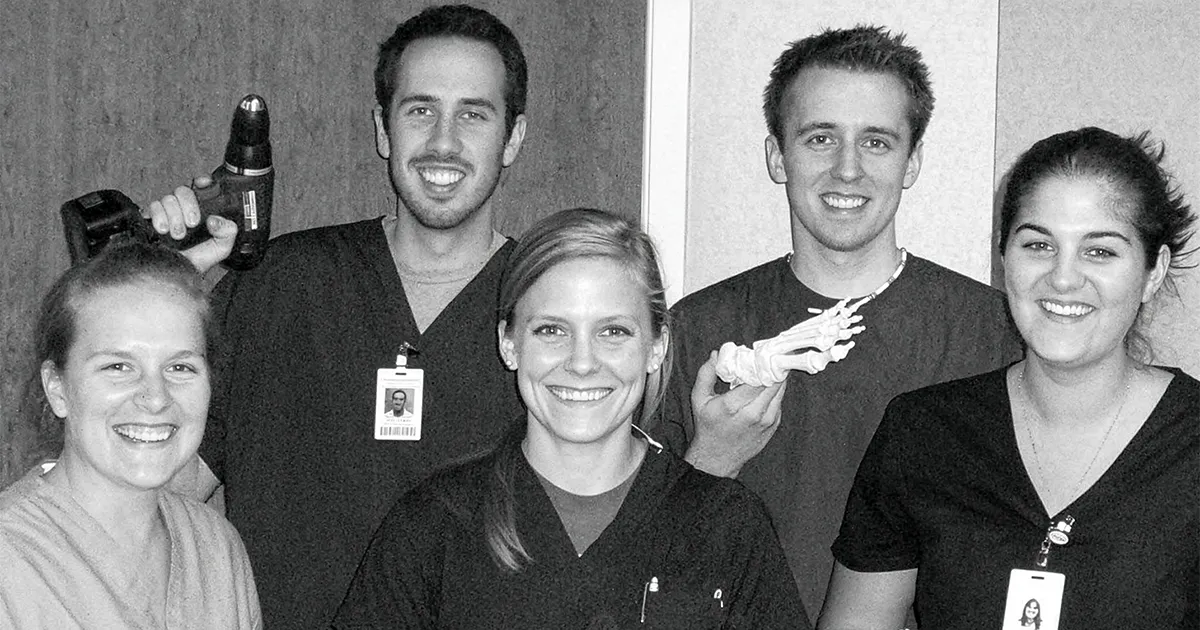
Now he pays that education forward. For years, he has hosted DMU podiatry students at his practice at McFarland Clinic, Iowa’s largest physician-owned multispecialty clinic. They observe surgeries. Sometimes, they get to do more than that.
He lets them drill. Place screws in fractures. Use surgical instruments for the first time. It’s the best way to learn.
Before and After Podcast
Several years into practice, after returning to Iowa, Dikis began thinking about medical education.
“I started to think about the medical education that was available nationally, and how it wasn’t quite cutting it. It was kind of boring. I thought there was a better way,” he says.
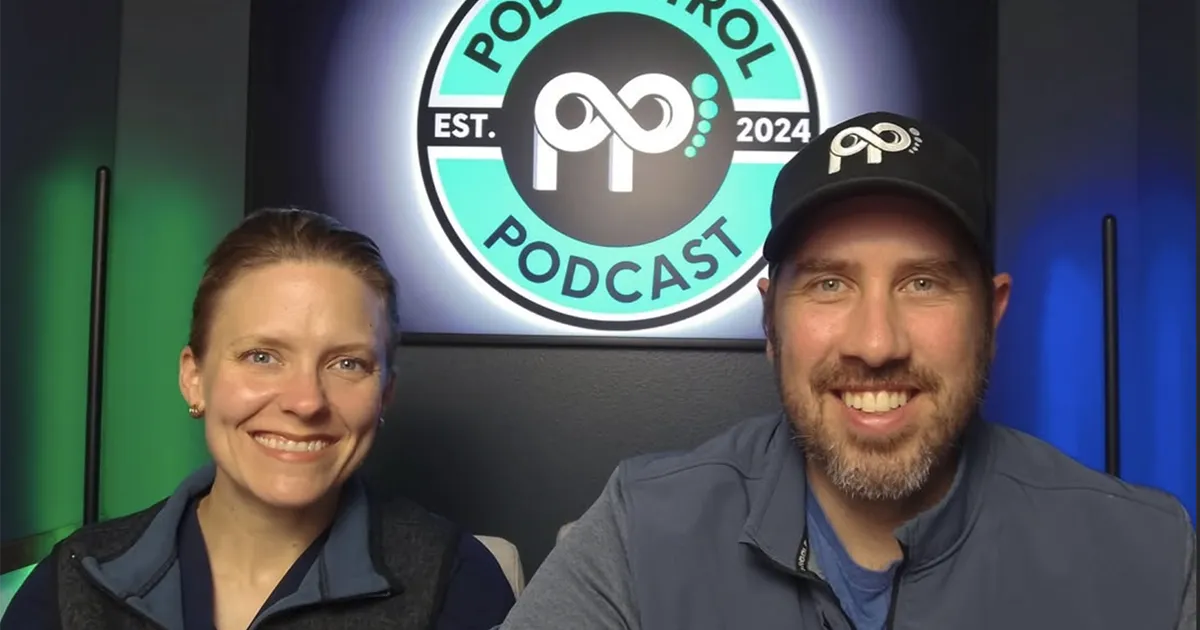
He and Ashley started an Instagram account that evolved into a nationally recognized podcast focused on foot and ankle education.
"We do what we think is entertaining medical education for a younger generation, meeting them where they spend time,” he says.
It works.
At a national meeting attended by 2,500 podiatrists in 2025, Dikis found himself being recognized and asked for photos. In 2026, he hosted a live podcast session there.
In his life, he jokes, there is “before podcast and after podcast.”
It takes time — recording, editing, scheduling — layered on top of a clinic schedule that can include 40 to 50 patients a day. But the payoff is scale.
"If I can educate a whole generation of doctors that go out and then help exponentially more people, I view that as a great opportunity,” he says.
Changing Perception
Kim Craun, CMA, AAMA, has worked alongside Dikis since 2019 as his medical assistant in Marshalltown, Iowa, where he is the only podiatrist and on call seven days a week.
“He’s a lot of fun. He’s very knowledgeable. Patients love him. We love him,” she says. (The numbers bear this out: he has a 4.74 out of 5 patient rating on the McFarland Clinic website.)
One example of his exceptional care involved a patient recovering from a serious car accident, who required nearly three years of ongoing care.
“She trusted him,” Craun says. “He did not ever waver in taking care of her.”
Patients often ask why anyone would choose to work with feet.
Dikis never hesitates.
“He comes in and does it so effortlessly,” Craun says. “He puts himself out there.”
A typical day includes fractures, tendon ruptures, sprains, surgery and complex diabetic wounds. It also includes unpredictability — add-on procedures, documentation after hours and worrying about outcomes long after the clinic doors close.
“You might see 40 patients in a certain day,” he says. “And 40 different things that are affecting those different people. I have to analyze each individual and come up with a treatment plan and make sure we’re on the right path for all of those.”
What motivates Dikis most is changing perception. Podiatry has historically been underestimated.
“My goal is to prove that we are as good as we can be,” Dikis says. “And that we are equal to any other doctor out there.”
Through clinical work, teaching and public-facing education, Dikis is helping rewrite that narrative.
At Home
Away from the clinic and microphones, family life revolves around their two sons.
They hike. Play sports. Watch sports. He has coached their basketball and soccer teams. One son plans to play in the NBA — despite having quit basketball. The other wants to be a YouTuber — despite not being allowed on YouTube.
Both boys already know where their tibia and fibula are.
It’s the kind of household where anatomy slips into dinner conversation, though he and Ashley make a conscious effort not to talk shop too often.
“It gets tiring,” he admits. But when a complicated case arises, having a spouse who understands every nuance is an undeniable advantage.
Dikis’s impact in all his roles is significant. Sometimes it looks like the student who places a screw for the first time. The physician who handles a case better because of a podcast episode. The patient who walks pain-free.
Dikis says he’s happy where he is — at the clinic, on the podcast, with family and students.
And tomorrow morning, without hesitation, he’ll crack open another Diet Mountain Dew.
Entirely committed.
Leah Glasgo, MHA’02, BSN, RN, FACHE
Rooted in Service
For Leah Glasgo, MHA’02, BSN, RN, FACHE, health care has never been about the prestige of the office or the complexity of the balance sheet.
Instead, it’s a calling rooted in the soil of her home state and the faces of the neighbors she serves.
Glasgo’s journey from a 5-year-old inspired by her aunt’s white nursing uniform to her current role as market president for UnityPoint Health – Fort Dodge reflects a career built on the power of saying “yes” to leadership and never losing sight of the patient at the center of the system.
Glasgo’s connection to nursing began in childhood, watching her aunt and her aunt’s best friend return from shifts at the local community hospital.
“I loved their white uniforms. They looked so angelic,” she recalls. “From that point forward, I knew I wanted to be a nurse.”
Raised by a teacher and a factory worker in Clarinda, Iowa, Glasgo didn’t originally envision herself in the boardroom. She wanted to help people in their moments of greatest need.
She began her career as a nurse in 1997. But an early mentor, the CEO at the hospital she was working for, saw something more.
“Leah, you’re in the wrong job,” he told her.
Encouraged by this insight, Glasgo stepped into leadership roles and eventually became a chief clinical officer, leading teams that included nurses, pharmacists and rehabilitation staff.
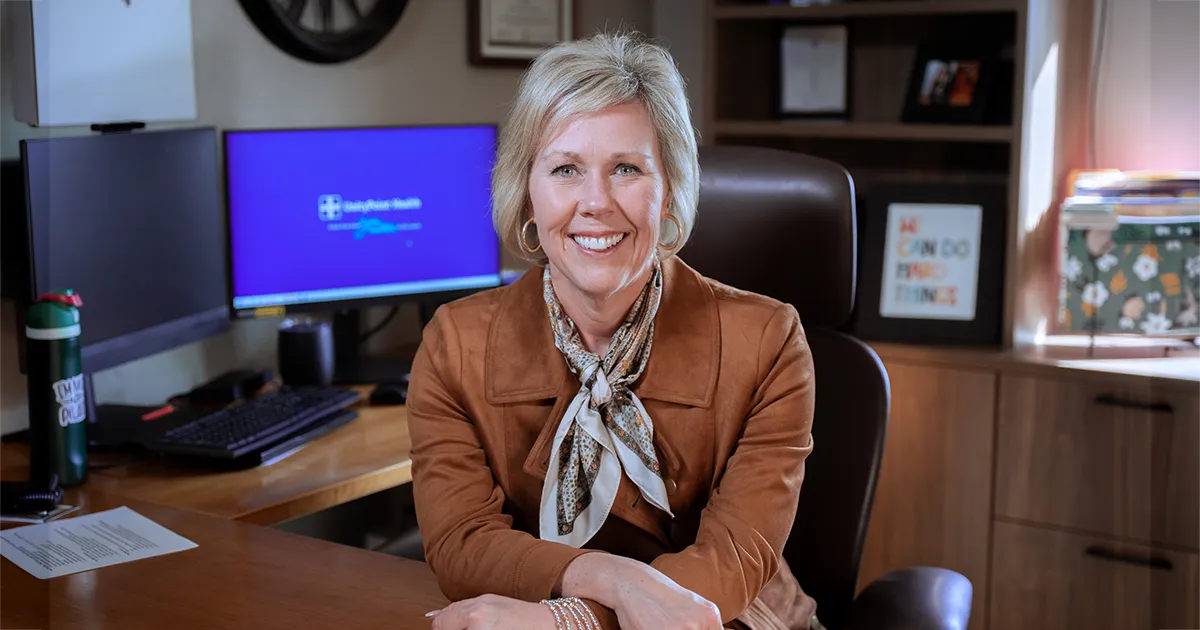
Glasgo is the 2026 Alumna of the Year for DMU’s College of Health Sciences.
Leah Glasgo, MHA’02, BSN, RN, FACHE
Rooted in Service
For Leah Glasgo, MHA’02, BSN, RN, FACHE, health care has never been about the prestige of the office or the complexity of the balance sheet.
Instead, it’s a calling rooted in the soil of her home state and the faces of the neighbors she serves.
Glasgo’s journey from a 5-year-old inspired by her aunt’s white nursing uniform to her current role as market president for UnityPoint Health – Fort Dodge reflects a career built on the power of saying “yes” to leadership and never losing sight of the patient at the center of the system.
Glasgo’s connection to nursing began in childhood, watching her aunt and her aunt’s best friend return from shifts at the local community hospital.
“I loved their white uniforms. They looked so angelic,” she recalls. “From that point forward, I knew I wanted to be a nurse.”
Raised by a teacher and a factory worker in Clarinda, Iowa, Glasgo didn’t originally envision herself in the boardroom. She wanted to help people in their moments of greatest need.
She began her career as a nurse in 1997. But an early mentor, the CEO at the hospital she was working for, saw something more.
“Leah, you’re in the wrong job,” he told her.
Encouraged by this insight, Glasgo stepped into leadership roles and eventually became a chief clinical officer, leading teams that included nurses, pharmacists and rehabilitation staff.
Glasgo is the 2026 Alumna of the Year for DMU’s College of Health Sciences.
The DMU Foundation
To sharpen her executive skills, Glasgo chose DMU’s Master of Health Care Administration program.
At the time, online education was not yet common. Glasgo balanced a full-time job with a 90-minute commute to campus for evening and weekend classes.
“DMU prepared us well,” Glasgo says, noting that the curriculum was comprehensive, covering everything from finance and supply chain to the nuances of caregiving.
Perhaps, most importantly, the instructors brought real-life health care experience into the classroom, bridging the gap between theory and the daily realities of hospital administration. This education gave her the technical tools she needed to complement her clinical background, allowing her to “speak the language” of both physicians and administrators.

Championing Rural Health Care
Today, Glasgo serves as market president for UnityPoint Health – Fort Dodge, a role she has held since 2019.
She oversees a 200-bed hospital and a service area that spans an 80-mile radius, including clinics and hospitals in communities like Storm Lake, Pocahontas and Lake City.
For Glasgo, the work is deeply personal.
“I’ve intentionally stayed in Iowa ... so that my family, my parents, my aunts and uncles, my children, can have health care for the long haul in our community,” she says.
One of her proudest recent achievements is the launch of a new cardiology program in Fort Dodge. By recruiting physicians and opening a new clinic, she ensured that vital heart care remained accessible to local residents rather than forcing them to travel long distances.
She is also overseeing a major surgery addition and renovation project slated to open in March 2027, which will further modernize care in the region.
Glasgo’s influence extends beyond Iowa’s borders through her seat on the American Hospital Association board, where she began a three-year term in January. In this national arena, she serves as a voice for rural and community hospitals, advocating for policies that address affordability, access and the unique challenges faced by smaller systems.
Leadership in Practice
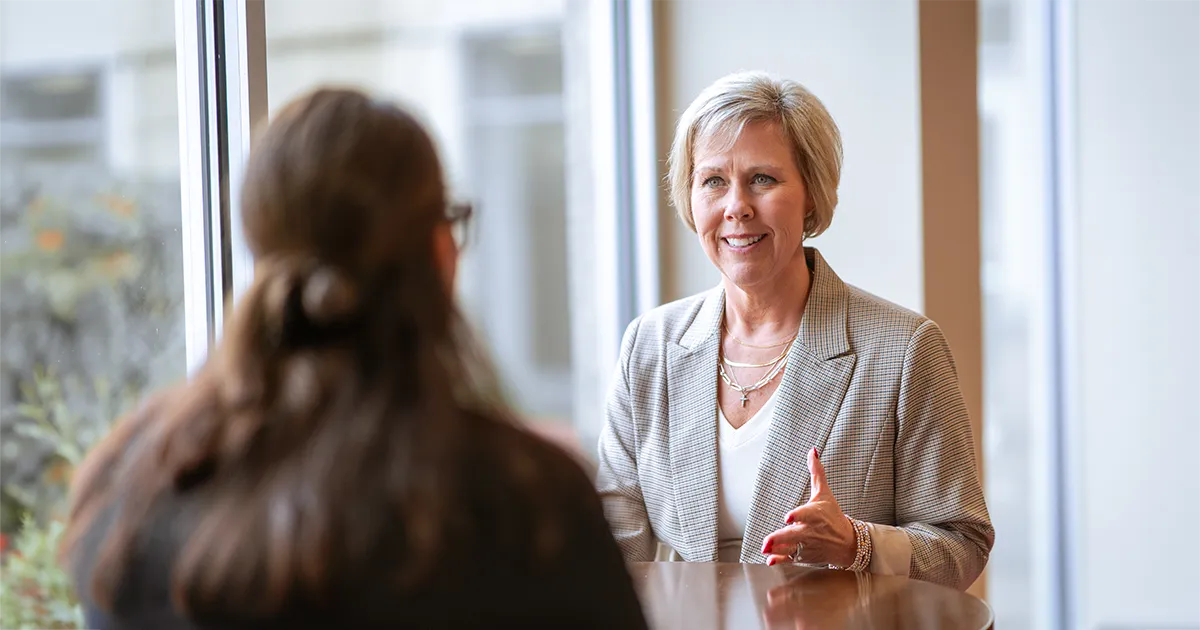
Despite her executive role, Glasgo keeps her leadership grounded in the daily work of health care.
Away from the hospital, Glasgo spends time with her grandchildren in Fort Dodge and enjoys pilates. On a typical day, she starts her mornings early with coffee, music and devotions before heading into a schedule often filled with meetings. She prioritizes time with employees across the organization. She makes a point to “get out and be with employees and the work at the front lines” whenever possible.
Her leadership philosophy centers on three principles: invest in talent, fix processes — not people — and serve your neighbor.
Regarding an investment in talent, Glasgo says that working as “one team” is the only way to truly take care of others. She believes that her greatest work achievements are the people she has mentored and watched grow into successful leaders, women in particular.
“When I started, I was one of the very few female CEOs in the state. I think there were three at the time,” she says. “I was 27 when I got into leadership, and I felt like I had to really know my stuff, so I spent a lot of time learning the business, which has served me well.”
She has seen progress over time.
“Women do have more opportunities to be in leadership roles today. I would say about half the state’s hospitals are run by female executives, so it’s neat to see how that’s evolved over time.”
When challenges arise, she believes leaders should look first at systems, not individuals.
“If there is a problem, start with the process, not with the people,” Glasgo says. “The process is usually where you can find opportunities to make things better.”
A Legacy of Service
But the motivation behind her work remains the same as it was when she first watched her aunt come home from the hospital decades ago.
Her recognition as DMU’s Alumna of the Year celebrates her professional achievement and reflects her dedication to ensuring that rural Iowans have access to high-quality care close to home.
For the next generation of health care leaders, Glasgo offers simple but profound advice: “Learn the trade and really learn who you are as a leader.”
Above all, she cautions new graduates against seeking a role in health care for power or prestige.
“This is about taking care of your community and your neighbors,” she says.
Through nearly three decades in health care, Glasgo has built a career grounded in service. She has proven that with a foundation in education, a heart for service and the courage to say “yes,” one individual can indeed transform the health of an entire region.