
As a first-year medical student at Des Moines University Medicine and Health Sciences, Parag Patel, DO’92, took a trip to Kenya — his birthplace — that would ultimately shape the course of his life.
There, he witnessed firsthand the stark realities of limited medical resources: a lack of basic supplies like stethoscopes, tape and gauze and undertrained medical workers overwhelmed by the volume of patients. Many, especially women and children, were dying from preventable diseases.
The experience sparked a persistent inner voice urging him to take action. That calling grew stronger during his involvement with the Student Osteopathic Medical Association at DMU, where he was exposed to broader global health needs.
As Patel began his career, the question became less about whether he would act and more about how.
“Even then, I was still trying to figure out how a cardiologist fits into a resource-limited part of the world dealing with nutrition issues and infectious disease,” he says. “It was about finding a niche where my skillset could actually be useful.”
In 2003, Patel carved out his own niche: the Global Foundation for International Cardiac and Community Services. What began as an effort to send medical equipment and supplies to Kenya — from pacemakers to defibrillators and dialysis machines — soon expanded. Patel and a network of volunteer physicians began traveling abroad to perform free cardiovascular procedures, improving access to lifesaving care for underserved populations.
Patel, an interventional cardiologist at Advocate Aurora Lutheran General Hospital in Chicago, defines Global FICCS’ mission as simple yet powerful: to educate, elevate and empower through health care training and scholarship. That mission serves as the connective thread across the organization’s expanding work.
Programs now span the full spectrum of education and training, from primary and secondary school scholarships that provide safe housing, meals and study resources, to advanced opportunities in community health, nursing and medical education.
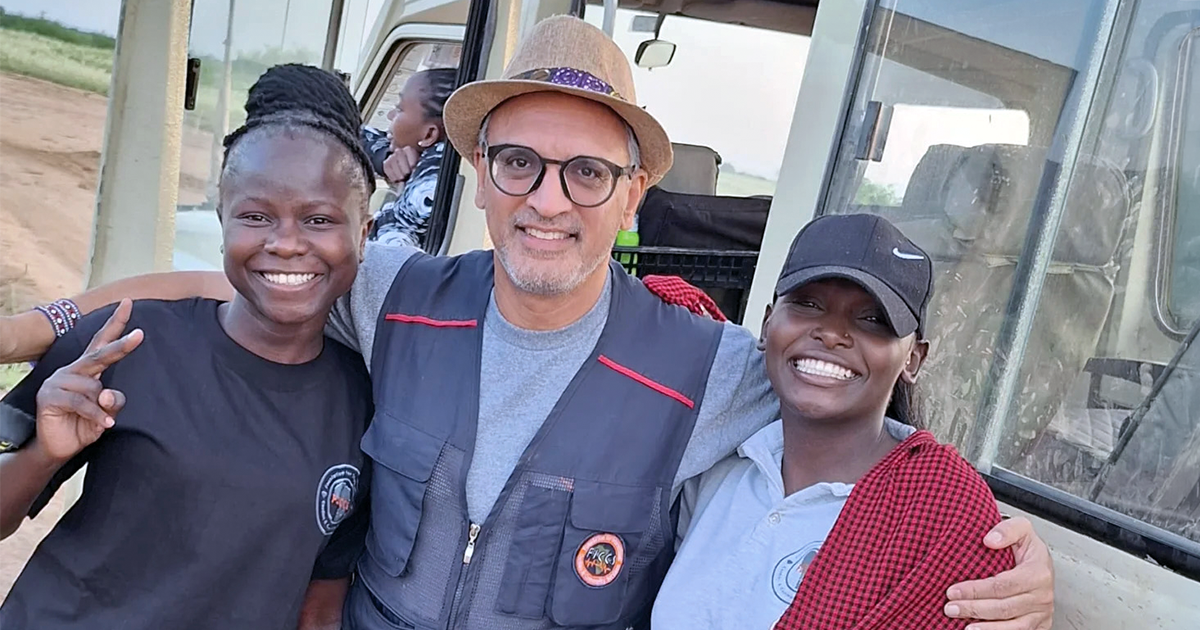
The organization also emphasizes mentorship, equipping nurses and young physicians with skills ranging from first aid and basic life support to advanced cardiac life support. A core group of Kenyan-based trainers lead much of this work while collaborating with experts from the United States, Europe and India.
In addition, Global FICCS has begun providing training to the private sector, including hospitals, hotels and corporations.
“It’s exciting because it gives us a glimpse of what’s possible — that we can generate income and use that to hire even more Kenyan-based trainers,” Patel says. “I’ve learned that this idea of empowerment isn’t just telling someone they’re ready to go out and get a job. It’s helping create the job.”
Many of the trainers Global FICCS ultimately employs are disadvantaged from the start. They might not have access to professional clothing. It can take multiple bus rides just to get to an interview opportunity. And even then, their zip code alone can work against them — an employer may question whether they’ll even show up.
“They’re facing barriers at every step, and if we can create the employment opportunity ourselves, we already know their skill set. We know what they’re capable of,” Patel says.
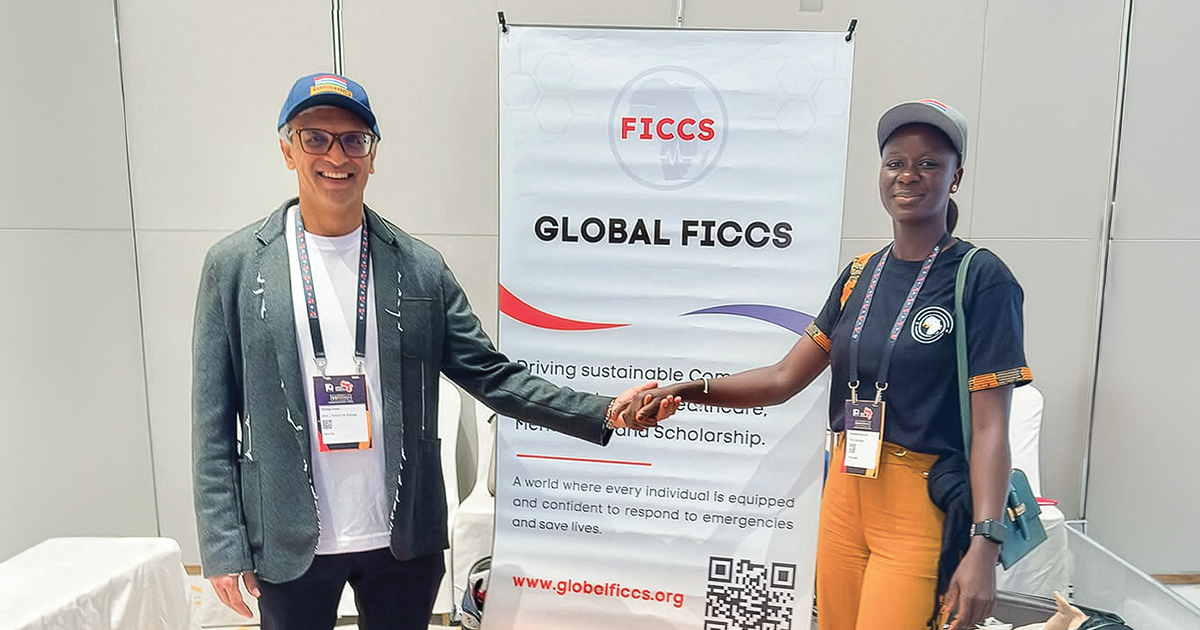
Patel has also expanded the organization’s reach through a partnership with Karl “Fritz” Disque, DO’07, a board-certified cardiac anesthesiologist, executive director of the Disque Foundation and co-founder of National Health Care Provider Solutions, an online medical education company.
The organization’s Save a Life Initiative aims to empower 30 million people with the ability to save a life by 2030.
Together, Patel and Disque have developed a hybrid training model that combines online foundational learning with in-person, hands-on instruction in East Africa, ultimately improving accessibility and preparing participants to make the most of on-the-ground training.
As he approaches the later stages of his cardiology career, Patel faces an increasingly important conundrum.
“I still love what I do, but this opportunity (Global FICCS) continues to expand,” he says. “And I find myself starting to think about that transition — when do I step away from clinical practice and move into organizing and growing the foundation full time?”
For now, Patel continues to balance both, driven by the same inner voice that began decades ago and a belief that opening doors for others can create lasting, generational change.