
10 DMU Degrees. 10 Alumni Stories. 10 Ways to Make a Difference.
Whether they studied osteopathic medicine, public health or biomedical sciences at 722 Sixth Avenue, 3200 Grand Avenue or the new campus at 8025 Grand Avenue, graduates of Des Moines University Medicine and Health Sciences share one thing in common: the degrees they earned prepared them to care, to lead and to serve.
It’s a physical therapist helping patients regain balance and confidence after the disorienting effects of dizziness.
It’s a plastic surgeon restoring form, function and a sense of self.
It’s an occupational therapy graduate just beginning her career, working toward becoming a Certified Hand Therapist.
Each path is distinct, and each calling is deeply personal. At DMU, those callings are first shaped in the classroom and continue in clinics, hospitals and communities near and far.
Through our Life After DMU series, we celebrate 10 alumni who exemplify the many ways a DMU degree can make a difference.
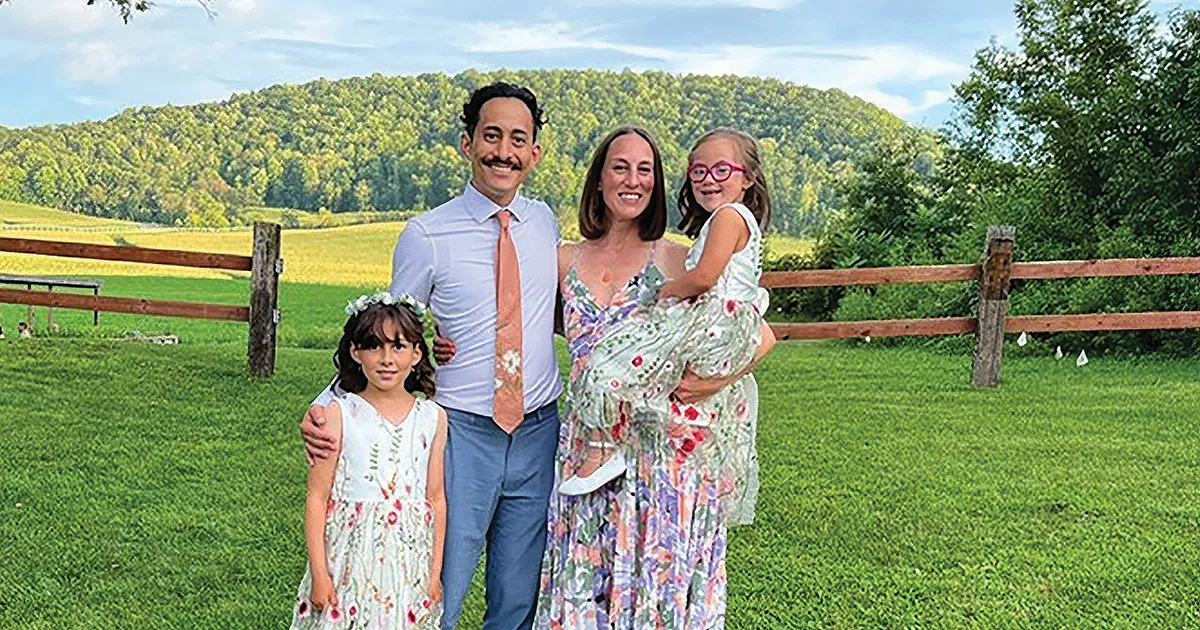
The Life of a ... Public Health Officer: The Possibilities of Public Health
During her time as a nutrition educator at WIC — the Special Supplemental Nutrition Program for Women, Infants and Children — Caitlin Suginaka, MPH’13, realized the program was a small cog in a much larger machine to build stronger, healthier community systems.
“It aligned so perfectly with my worldview of ‘think globally, act locally,’” she says.
Suginaka comes by this view naturally, since she grew up in Latin America and learned Spanish in kindergarten. It’s because of that skill that the political science and Hispanic studies graduate unexpectedly found herself providing healthy foods and education to at-risk families.
“I had no nutritional background, but I knew it was going to be providing a service to community members who were most in need, and I could do that in Spanish,” she says.
During her time at WIC, Suginaka became interested in pursuing a Master of Public Health. DMU became her top choice for pursuing her MPH after her husband, Alex Suginaka, DO’14, was accepted into its Doctor of Osteopathic Medicine program.
At DMU, Suginaka completed an internship at the Iowa Department of Public Health, serving as a program planner for the 1st Five Healthy Mental Development Initiative, which focused on early child development screenings and family wellbeing. She later transitioned to quality assurance program manager for the department’s Maternal, Infant and Early Childhood Home Visiting Program, where she was introduced to adverse childhood experiences and their impact on lifelong health trajectories.
What Suginaka valued most about DMU’s MPH program was the ability to immediately apply what she was learning while continuing to work full time. She expanded her learning through a global health internship with the Pan American Health Organization and a practicum internship with Robert Anda, MD, one of the original researchers behind the CDC’s Adverse Childhood Experiences Study.
These experiences taught Suginaka a lot about systems thinking and how it applies to public health.
“A successful system understands that it’s built of humans who need compassion, support and flexibility,” she says. “There are ebbs and flows, and systems should reflect that.”
That perspective shaped how Suginaka approached her career. Her work began with trauma-informed initiatives in schools and public health systems in Washington State, followed by consulting work that allowed her to remain engaged in community health while raising her family. Her scope widened further in Minnesota, where she supervised the healthy communities team at Washington County Public Health, focusing on chronic disease prevention and policies, as well as environments and systems that support healthy living.
When the COVID-19 pandemic tested those systems, Suginaka stepped into the role of public information officer, guiding messaging and communication strategy during a period of constant uncertainty. Later, her work shifted toward knowledge building and workforce development through teaching community health and epidemiology at the University of Wisconsin–Eau Claire.
Today, Suginaka serves as health officer for Marathon County Public Health while pursuing a Doctor of Public Health at Tulane University — bringing academic learning and real-time community practice together.
“Public health is local,” Suginaka says. “Every community is unique in how they approach problems and solutions, and I feel lucky to work in one with so many resources and big thinkers.”
Ultimately, Suginaka’s path is rooted in the belief that public health works best when it remains flexible and responsive to the communities it serves.