
10 DMU Degrees. 10 Alumni Stories. 10 Ways to Make a Difference.
Whether they studied osteopathic medicine, public health or biomedical sciences at 722 Sixth Avenue, 3200 Grand Avenue or the new campus at 8025 Grand Avenue, graduates of Des Moines University Medicine and Health Sciences share one thing in common: the degrees they earned prepared them to care, to lead and to serve.
It’s a physical therapist helping patients regain balance and confidence after the disorienting effects of dizziness.
It’s a plastic surgeon restoring form, function and a sense of self.
It’s an occupational therapy graduate just beginning her career, working toward becoming a Certified Hand Therapist.
Each path is distinct, and each calling is deeply personal. At DMU, those callings are first shaped in the classroom and continue in clinics, hospitals and communities near and far.
Through our Life After DMU series, we celebrate 10 alumni who exemplify the many ways a DMU degree can make a difference.
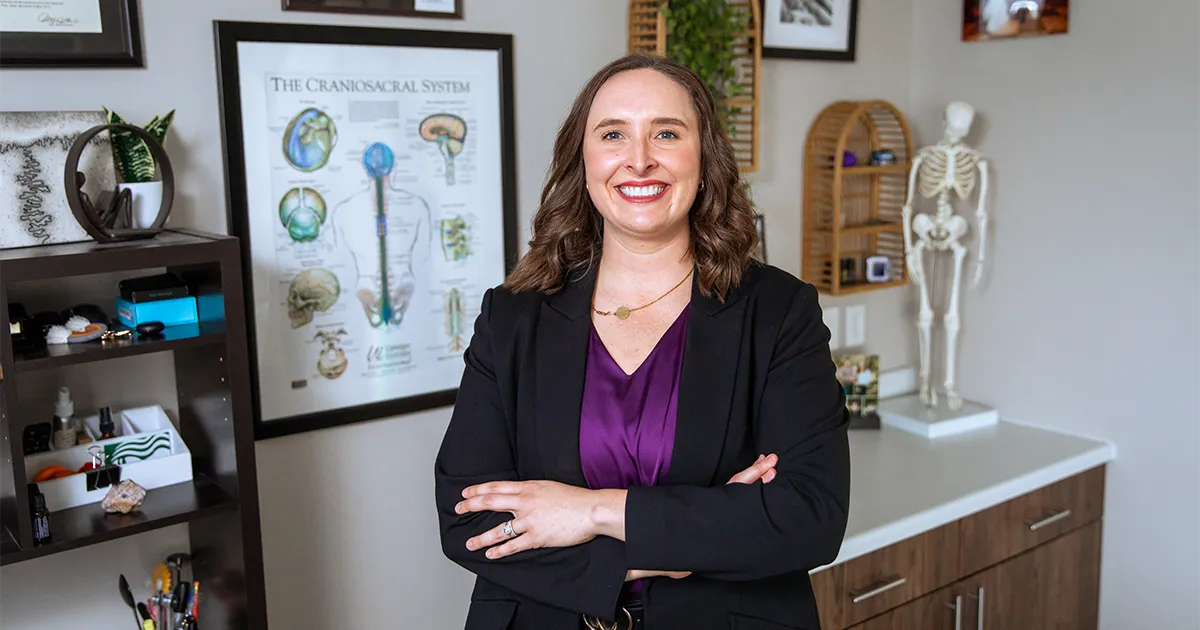
The Life of a ... Physical Therapist: Small Spaces, Big Impact
As a practicing partner at Core Physical Therapy in West Des Moines, Iowa, Kirsten Radke, PT, DPT’15, draws on her specializations in pelvic health rehabilitation, craniosacral therapy, concussion management and vestibular therapy. Nearly 80% of her caseload involves patients navigating dizziness, vertigo, migraines and other neurologic conditions.
That focus on helping people through complex medical challenges reflects her own family’s story, shaped by her mom, a nurse practitioner, and her dad, who survived both pancreatic cancer and a semi-truck accident.
After the accident, her dad required significant rehabilitation, particularly for his lower extremities. His physical therapist assigned functional exercises — like practicing how to get in and out of a tractor — and Radke learned alongside them, essentially serving as her father’s PT aide on their family farm.
“Between sports injuries and everything my dad went through, I realized I really wanted to help people in ways that a pill can’t fix,” Radke says. “Physical therapy checked that box for me.”
During her undergraduate years, Radke worked as a home health aide for a woman who lived with ALS.
“There was a PT clinic in Storm Lake that she loved because they focused on helping her live her fullest life, even knowing she wouldn’t be cured,” Radke says. “That’s where I was first exposed to craniosacral therapy. I didn’t really understand it at first — I thought it was kind of crazy — but she loved it, and it made her feel better.”
Her exposure to the specialty reaffirmed Radke’s interest in Des Moines University Medicine and Health Sciences’ osteopathic approach.
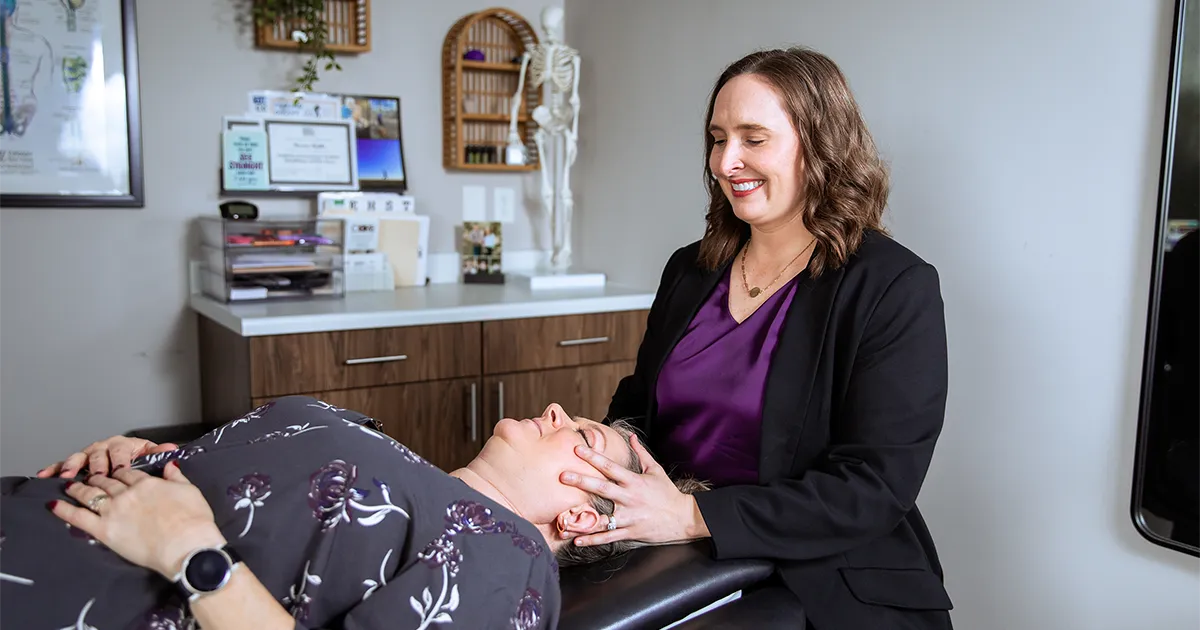
As a Doctor of Physical Therapy student, Radke immersed herself in the idea of treating the whole person, not just a diagnosis. Her experience also emphasized interdisciplinary collaboration.
“At DMU, you’re surrounded by people in different health professions,” Radke says. “That mindset has carried into my career.”
In fact, Radke helped co-found the Iowa Vestibular Symposium, which brings together providers from different disciplines, states and even countries to advance care for patients with vestibular and neurologic conditions.
“DMU made that kind of collaboration feel possible … and normal,” she says.
Outside of her clinical work, Radke serves on the leadership team for No Foot Too Small, an organization that supports families navigating pregnancy and infant loss — a cause that became deeply personal after the stillbirth of her daughter, Riley, in 2020.
“I am especially grateful for the many DMU connections that allow me to collaborate with providers and support patients and families who experience this loss,” Radke says.
For Radke, helping families in this way circles back to why she loves being a physical therapist.
“Most of my day isn’t even pain-related,” she says. “It’s about function and movement. If I can help bring those things, plus purpose and fulfillment, back to someone’s life, then I’m doing my job.”