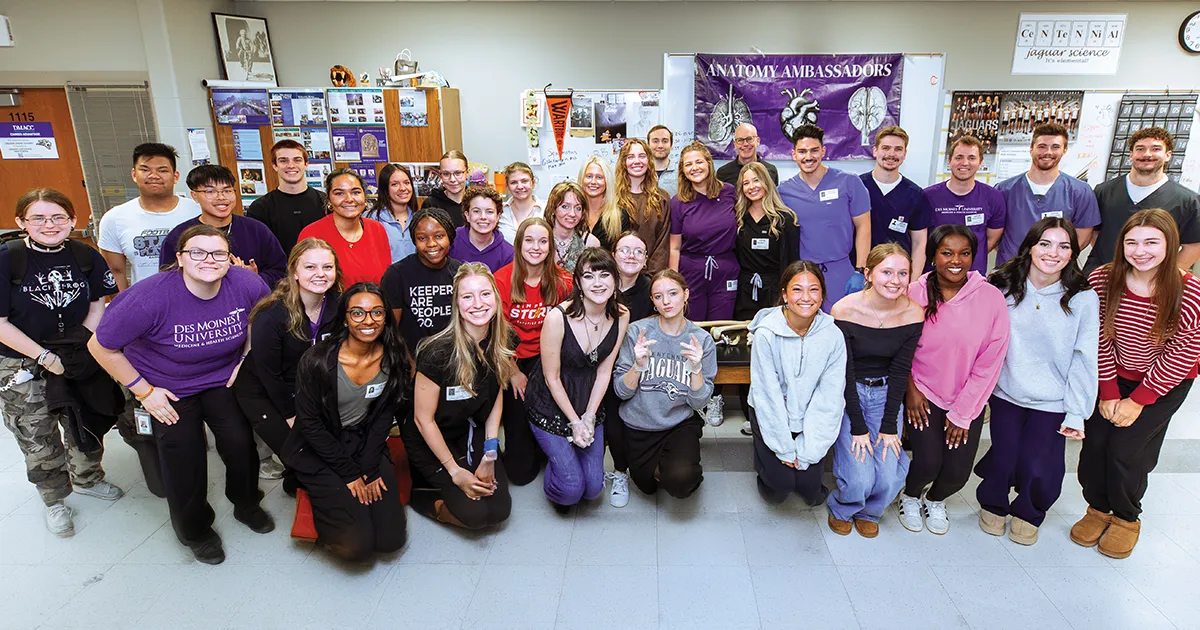
Anatomy Ambassadors Program Lets Students Hold Science in Their Hands
At an Anatomy Ambassadors Program event at Ankeny Centennial High School this past spring, Des Moines University Medicine and Health Sciences students fielded questions from high schoolers in Chad Fickbohm’s anatomy classes. The curiosity in the room was unmistakable — and so was the impact of seeing human anatomy up close.
Through hands-on exposure to real organs, the Anatomy Ambassadors Program transforms abstract science into something tangible, sparking thoughtfulness in young learners while reinforcing purpose for the medical and health sciences students who teach them.
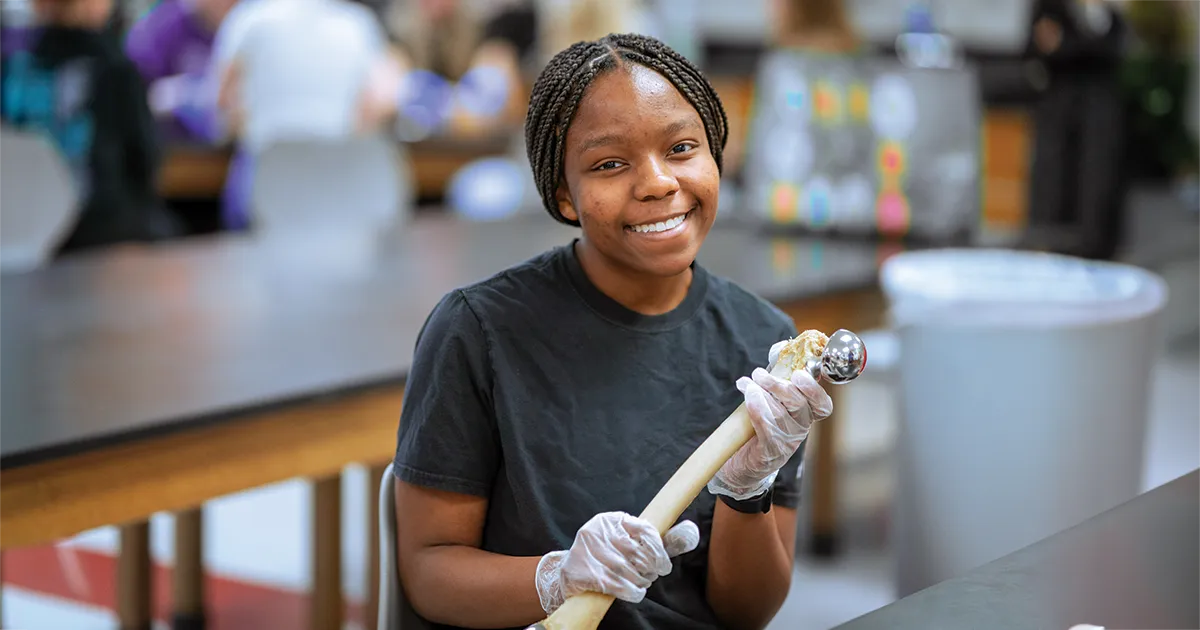
The program has been part of DMU for years, first launched by Donald Matz, PhD, professor and past chair of the department of anatomy, and brings real human organs into classrooms and community settings, primarily serving K-12 students. Ambassadors also participate in STEM events and career fairs hosted by schools, libraries and other organizations.
At a typical classroom visit, students rotate through four stations led by ambassadors, where they get to both observe and interact. They can hold bones and prosthetics, examine hearts and lungs, explore the brain and follow the gastrointestinal system.
“My students love it,” Fickbohm says of the experience. “The biggest thing is that they’re surprised at how the organs look — not like the pictures or the idea they had in their heads. Comparing healthy and diseased organs is a great way to help them make connections to the systems we’ve covered.”
In addition to classroom visits, the program offers more advanced experiences, including cadaver presentations in DMU’s anatomy lab.
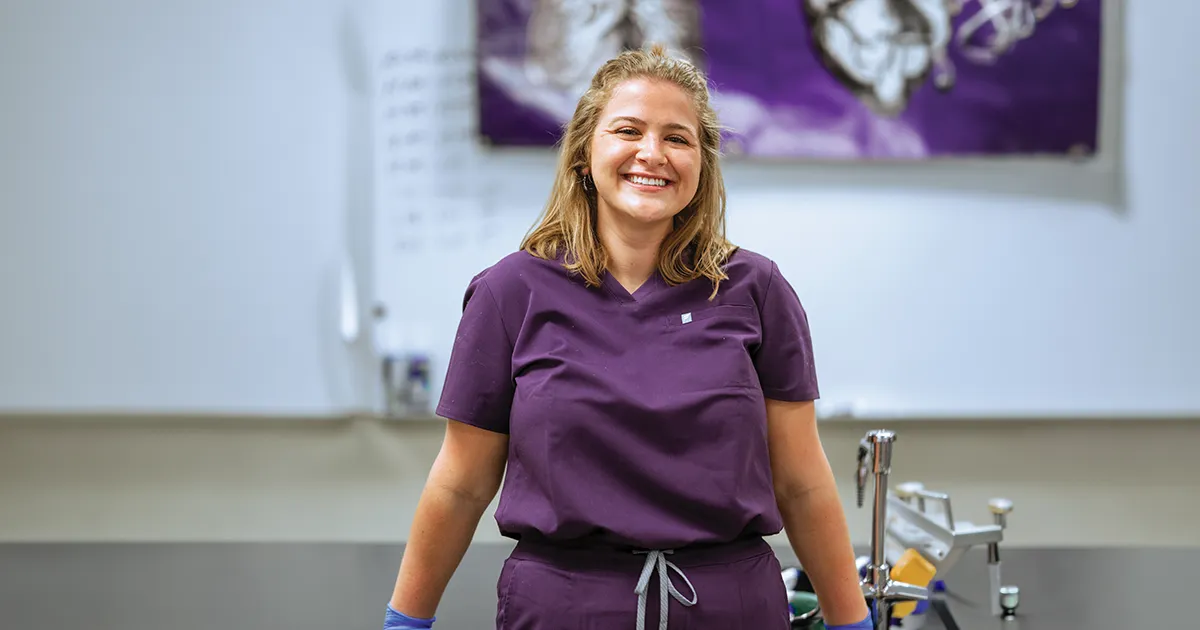
One experience that stands out to Elizabeth (Lizo) McMahon, DO’28, past president of the program, involved working with more than 500 middle school students in Johnston over two days.
“The kids are incredibly curious and respectful,” McMahon says. “We always start with a discussion about safety and respect, especially since we’re working with human donors. That respect is something we emphasize heavily, and students consistently rise to that expectation.”
While some students may leave inspired to pursue medicine, the program is designed to open doors more broadly, connecting anatomy to a wide range of careers.
“Even in high school, students are interested in a variety of paths, from medicine to engineering,” McMahon says. “We try to connect what we’re showing, like prosthetics or pacemakers, to different possibilities.”
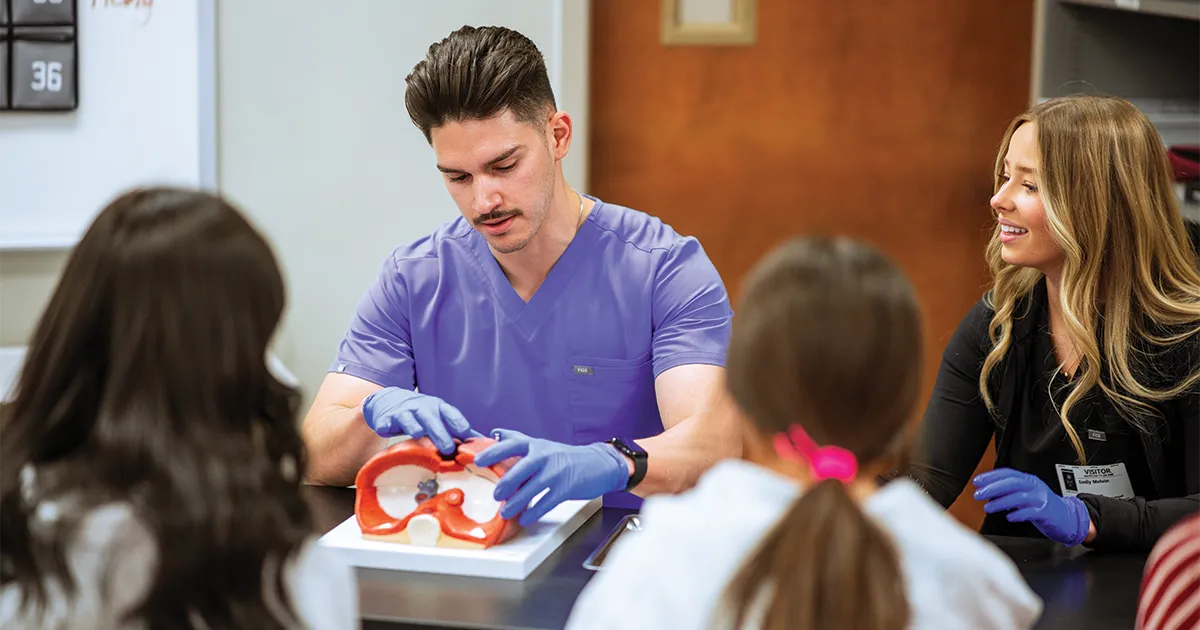
Much of the program’s recent growth is credited to former leaders Emily Melvin, MSA’25, DO’29, and Juan Portal Figueroa, MSA’25, DO’29, who shifted the format from lecture-style presentations to hands-on, small-group learning — an approach that has proven far more engaging.
For Portal Figueroa, the program is about making complex science accessible, especially for students who may not otherwise see themselves in health care.
“In the moment, you can see students become genuinely curious and excited, especially when they get to interact with real anatomical structures or hands-on models,” he says. “Longer term, it helps plant the seed that a career in health care is possible. Even for students who don’t pursue medicine, it builds confidence in science and makes learning feel more tangible and relevant.”
As the program grows, leaders are focused on making that impact sustainable by streamlining logistics, expanding on-campus events and building stronger partnerships with organizations like the Science Center of Iowa to reach broader audiences.
“For me, being involved in this program is a reminder of why I chose medicine in the first place,” McMahon says. “It also reinforces what we’ve learned. Teaching others helps solidify that knowledge.”
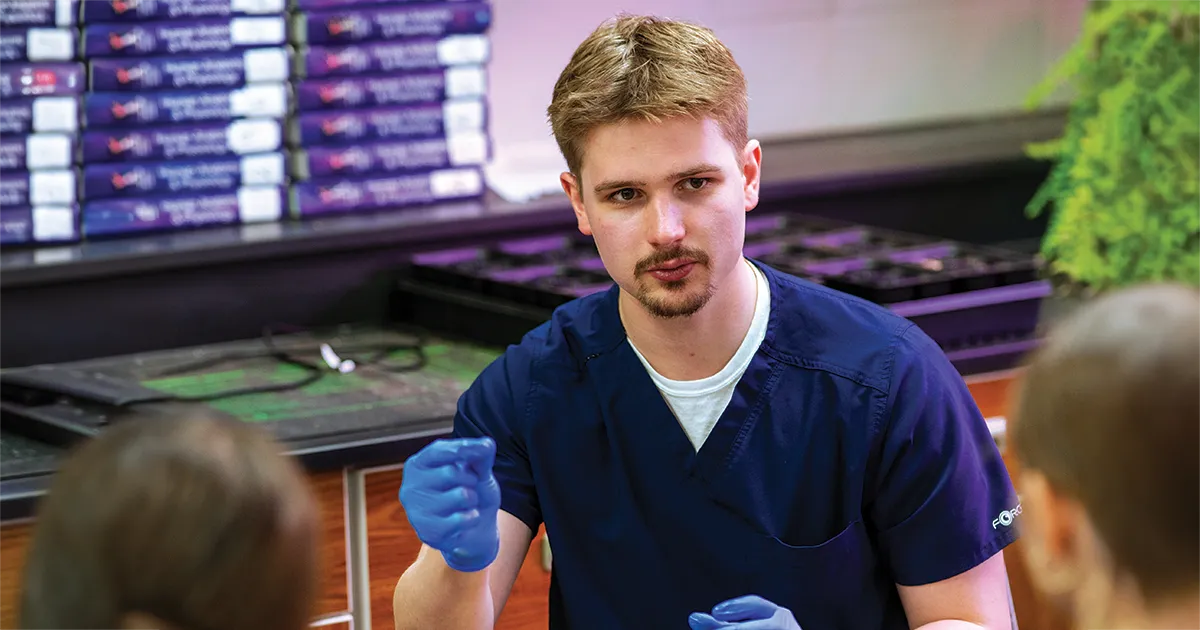
Owen Nitkowski, DO’29, sees that same dual benefit.
“I’m a firm believer that you don’t truly know something until you can teach it,” he says. “This program has helped me not only recall what I’ve learned at DMU, but also grow into someone who can explain complex topics clearly. As a future physician, that’s essential.”
For McMahon, the impact is often immediate — and lasting.
“At one event, a parent told us their child went home and talked for three hours about what they learned and had never been so excited about school,” she says.
Moments like that capture the program’s larger purpose: making science feel real, and making future possibilities feel within reach.