
For a select group of students, the path to becoming a doctor is a dual mission, combining the rigorous demands of medical school with a commitment to military service.
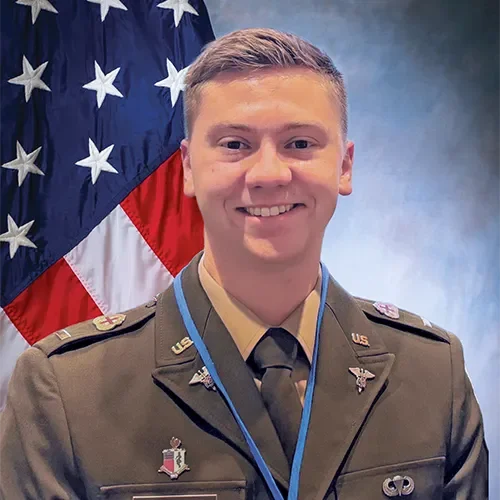
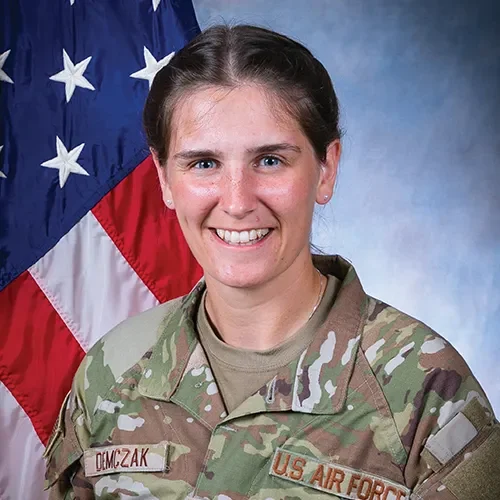
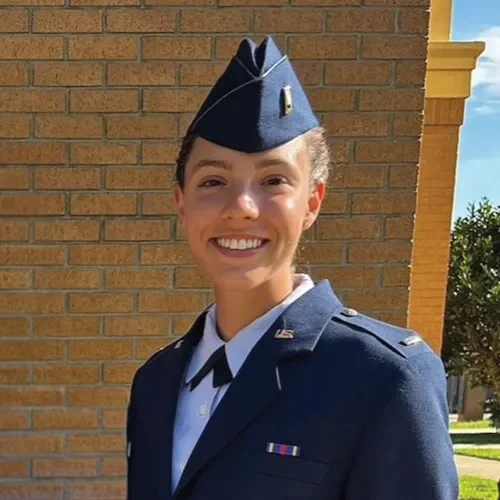
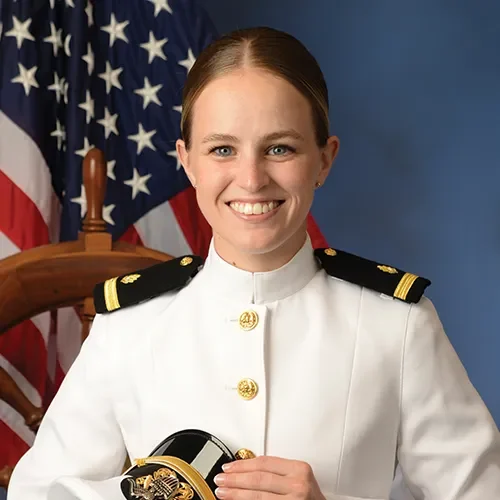
Students like Macy Mixdorf, DO’28, (Navy), Melissa “Missy” Demczak, DO’28, (Air Force), Noelle Hauskins, DO’28, (Air Force) and Peter Dengler, DO’28, (Army) are pursuing their medical degrees through programs like the Health Professions Scholarship Program, which covers the cost of tuition at Des Moines University Medicine and Health Sciences in exchange for a service commitment.
Why chase dual commitments? All four students say that it comes down to a deep-seated desire to serve. Dengler, for example, did four years of Reserve Officers’ Training Corps at the University of Iowa before receiving the HPSP scholarship. He was drawn to the military by an “innate sense of service” before he even decided on medicine. He sees his future as being of “service to those that serve our country.”
Mixdorf, whose mother is a family physician, was inspired by the opportunity to be multifaceted by pursuing both medicine and a military career. Hauskins, who also has military roots with her grandfathers serving in Vietnam, sees it as part of the family legacy. Mixdorf is quick to point out: “You don’t need a long family history in the service to find your place in military medicine.”
The most significant benefit for these medical students is the removal of financial pressure. While her civilian peers are worried about loans and paying bills, Hauskins says it’s reassuring knowing that her military service is paying for her schooling. All four students also receive a monthly stipend that helps offset living expenses while they attend medical school.
“The military is investing in you to become a physician, become a doctor,” Dengler adds.“ They want your sole focus to be becoming a doctor.”
Juggling Training and Academics
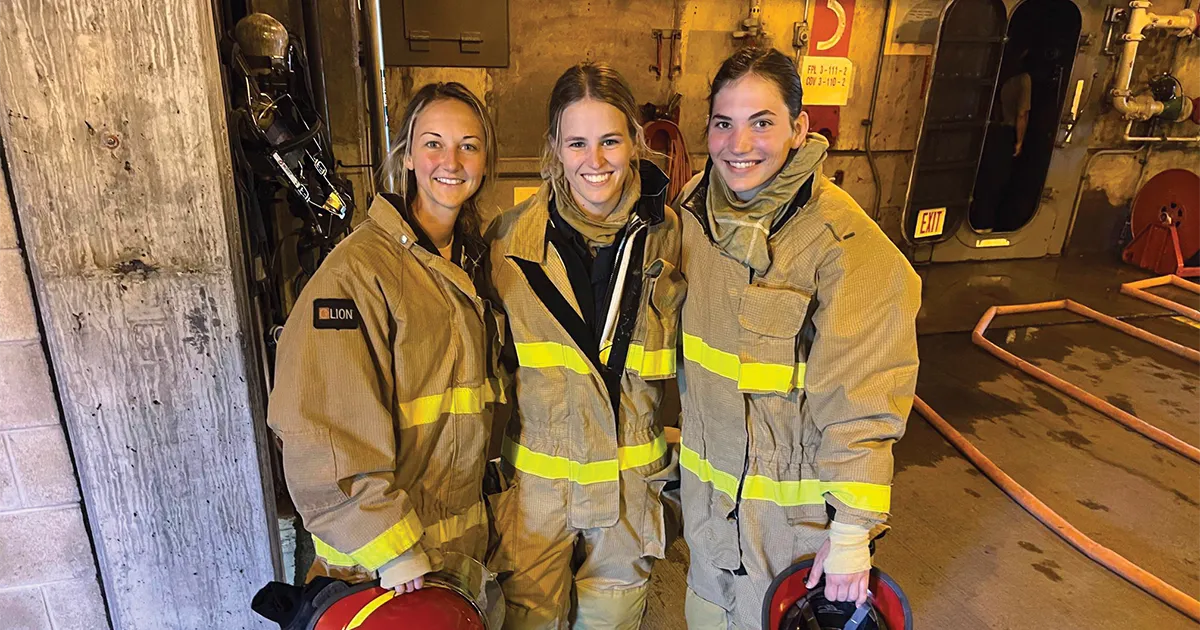
While medical school is their primary focus, students must meet annual active-duty requirements and complete officer training. This training can be demanding. Demczak described the five- to six-week officer training as a period where she got as little as five hours of sleep on a good day. Hauskins says it taught her a valuable lesson.
“It’s OK to be super uncomfortable. It’s OK to be super stressed, and it’s OK to feel like you’re outside of your comfort zone,” she says. “And if you can teach yourself to be OK with that, you can get through way more things than you ever thought we could.”
On the flipside, during their academic years, students often receive school orders that allow them to stay at school and focus on their studies, fulfilling their annual service obligations without disruption.
The Future of Military Medicine
After graduation, students look toward military residencies, which offer unique benefits. Demczak, who is leaning toward surgery, heard from mentors that military residencies often throw doctors into hands-on work “a lot more quickly,” which appealed to her as a hands-on learner.
Their Career Goals are Diverse:
- Mixdorf hopes to secure a military residency with the Navy, ideally in San Diego.
- Hauskins is interested in a field that combines patient interaction with procedural surgery.
- Dengler is considering emergency medicine and carries a total service commitment of 16 years (eight active duty and eight reserve) due to his ROTC background.
Despite their differences, the students find strength in their tight-knit community. They are part of the Student Association of Military Osteopathic Physicians and Surgeons and rely on mentors and alumni for guidance on everything from military-specific residency applications to physical fitness. Their advice to students considering this path is simple: don’t be afraid to start and to ask questions.
If you are affiliated with the armed forces and would like to mentor a student please contact alumni@dmu.edu or 515-271-1454.