
One Des Moines University Medicine and Health Sciences grad filmed a commercial with Bowen Yang.
Another co-hosted a hit TLC show about feet.
Others are turning TikTok, podcasts and viral memes into public health tools.
These DMU alumni are racking up millions of views and followers on television and social platforms — all while helping their audience live healthier lives.
Here, they share the rules of success.
When Dustin Portela, DO’13, signed up for his first TikTok account in 2018 — @208skindoc, a nod to the area code and custom vanity number he’d purchased for his Meridian, Idaho, clinic — the dermatologist thought the platform might be a good way to drum up patients for his fledgling practice.
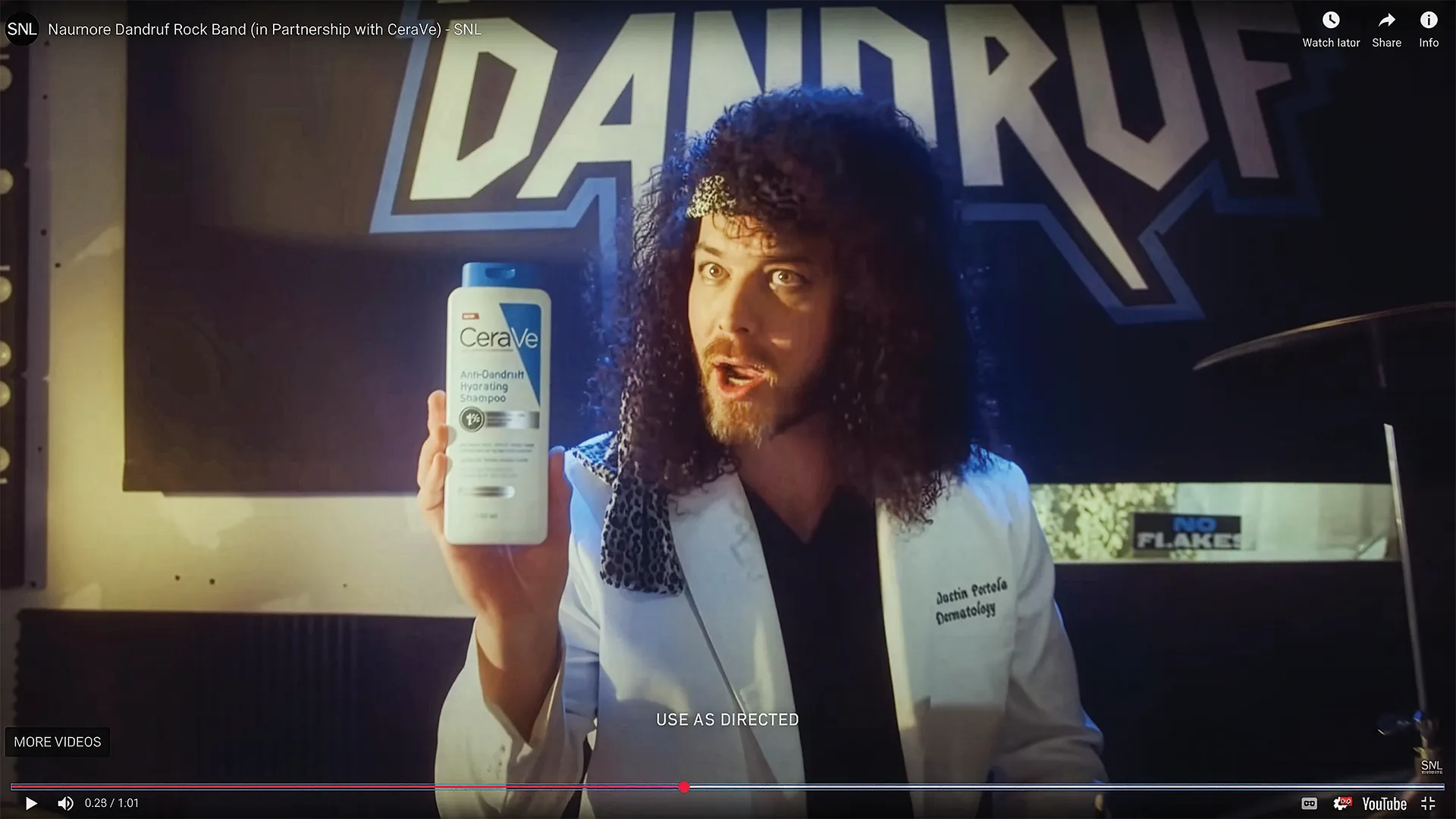
Seven years and more than 2 million followers later, he found himself on a call with the skincare brand CeraVe: Would he be interested in flying to New York to film a commercial with “Saturday Night Live’s” Bowen Yang and Sarah Sherman?
“I was like, ‘Uh, yeah, I’ll move mountains to do that,’” he says of his lightning-fast assent.
The call didn’t exactly come out of nowhere: Portela’s warm on-screen presence, filtered through a combination of friendly dermatological advice, zeitgeist-capturing viral videos and reaction videos to the “oddly satisfying” genre of content like pimple popping, had proven to draw in online followers, in-person patients and, in recent years, multibillion-dollar companies.
Ultimately, Portela headed to New York and spent 13 hours on set. The resulting 60-second commercial, which features Portela as a drummer for a heavy metal band who helps his head-banging bandmates treat their dandruff with a CeraVe product, was seen by more than 15 million people who watched SNL’s 50th Anniversary Special.
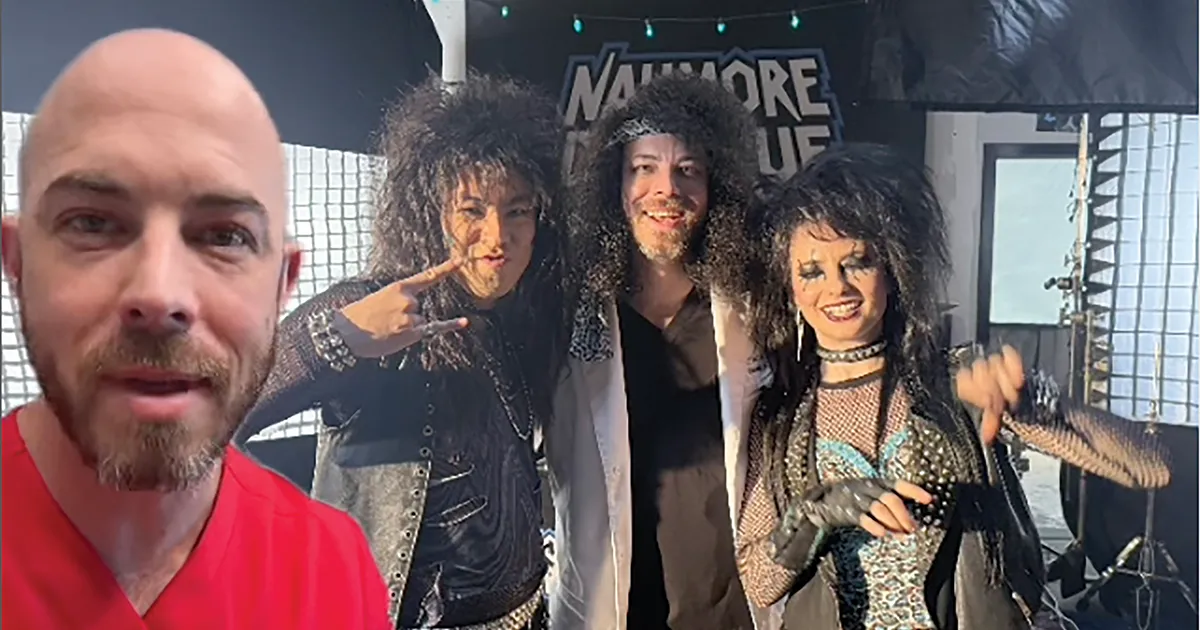
And while Portela is open to other similar opportunities — he jokes that he’s “caught the bug” — he says the true joy of his work is making a difference in real people’s lives.
“It’s not uncommon for me to get a message from someone who’s seen one of my posts, decided to go to a dermatologist for the first time and caught skin cancer early,” he says. “That’s the most rewarding thing for me.”
Across social platforms and other media formats, graduates from many of DMU’s programs are using their expertise to educate, advocate and connect, often reaching audiences far beyond what’s possible in a traditional clinic setting.
Here, they outline the rules they live by, turning social media into a powerful extension of their care.
Rule #1: Help Patients and Elevate Your Field
Ebonie Vincent-Sleet, DPM’15, MBMS, had built a 6,000-follower strong Instagram account about her life as a resident physician in New Jersey when she landed an independent contractor job for Orange County Podiatry in Irvine, California, in the summer of 2018.
The clinic was impressed with her entrepreneurial spirit and encouraged her to continue posting after she arrived. Within three months, a production company reached out to gauge her interest in helping them develop a show about feet.
“I thought it was fake,” she admits. “I thought: Who wants to watch a show about feet?”
A lot of people, it turns out. In early 2020, “My Feet Are Killing Me” premiered on TLC with Vincent-Sleet as a co-host.
While the first season featured conditions she routinely saw in her work as a podiatrist — hammertoe, fungal nails — the show shifted toward rarer and more dramatic cases by its fourth and final season in 2023.
To help treat extreme conditions for patients who often considered Vincent-Sleet their last, best hope, Vincent-Sleet reached out to mentors, doctors and other specialists who could provide insight.
“Not everything could be solved,” she says of the conditions patients had, such as a rare systemic autoinflammatory condition known as Still’s disease. “But I wanted to at least get them pointed in the right direction.”
While she’s proud of the work she was able to do for individual patients, Vincent-Sleet, who is now a partner at her practice, says she’s even prouder of the way she was able to represent the profession of podiatry.
“Sometimes, people [insinuate] that we go to school for years to clip toenails. But we can do surgery, we’re nimble with our fingers, and we can help you get back on your feet,” she says. “The show educated people about what we’re really capable of.”

Rule #2: Chase Passion, Not Clicks
Aleksandra Brown, DO’09, isn’t afraid to hop on a viral trend — her clever takes with a dermatological twist are what have helped her build a follower count of more than 300,000 across TikTok and Instagram while increasing the visibility of River Ridge Dermatology across its three southwest Virginia locations.
But vast follower counts didn’t immediately lead to the kind of work life she wanted.
“My hairdresser once put it this way: You should put on your Instagram page what you want in your chair,” she says.
In other words, your content should attract the kind of patients you want to treat. It’s why these days, you’re most likely to see Brown posting about perimenopause, acne and melasma, conditions she feels most passionate about.
“Those are the people I want coming here, because they make my job so much fun,” she says. But Brown hopes that she can have an impact well beyond the patients who might visit her clinic.
“Studies show that people forget up to 80% of what is said in a doctor’s office — they’re not going to go to their portal, they’re going to lose the printout,” she says. “But if they’re already scrolling and they can easily watch something again, they’re more likely to take action and to have a good result.”
Rule #3: Make Learning Binge-Worthy
Jeff Dikis, DPM’12, and Ashley Dikis, DPM’12, love the profession of podiatry (and each other). Each has spent years working with medical students and residents one-on-one — Jeff as a partner at McFarland Clinic in Marshalltown, Iowa, and Ashley as an assistant professor in DMU’s College of Podiatric Medicine and Surgery.
Still, the pair often felt like the field unfairly flew under the radar compared to other areas of medicine.
“We wanted to get the word out to more people to show them that [podiatry] is a really cool option,” Ashley says.
And that meant meeting people where they were: online. The two started with an Instagram page, FootDocDuo, in 2023. The page — a combination of playful podiatry memes and more in-depth clinical insights — has attracted more than 4,000 followers.
Then, in 2024, Jeff launched PodPatrol, a weekly video podcast that brings on experts to discuss a range of topics in podiatry, from specific surgical techniques to career development to financial management. He imagined it as a slightly more freewheeling and entertaining companion to the traditional educational approaches like medical school or professional conferences.
“It was about getting some of the people who were the best in the country to speak about what they’re an expert in — and making it engaging,” Jeff says.
It’s since become a bona fide hit. Despite its admittedly niche topic, it was among the top 10 percent of video podcasts on Spotify in 2024. And it’s also proven to have successfully bridged the gap between education and entertainment: thanks to their online presence, both Jeff and Ashley have expanded their professional networks and been invited to speak on panels and other podcasts.
“Students will watch episodes and say it helped them on tests. People will stop [us] at conferences to say thank you,” Jeff says. “It’s been overwhelmingly positive.”
Rule #4: Practice What You Preach
In theory, Kat Astrup, MSPAS’14, had it all. As a physician assistant, she was earning good money. She had significant career flexibility and knew she was making a real difference in people’s lives.
But when the pandemic hit, she realized her day-today life was nothing like she had once envisioned.
“I was burnt to a crisp,” she says. “I was struggling to be thorough and be on time in my work, I had six figures of student loan debt, and I was feeling the pressure to sustain my income because of ‘lifestyle creep’ — spending more on things like cars and a house.”
It was then that she learned about the financial independence, retire early movement, which encourages people to restructure their relationship with work, money and time to reduce their financial stress and build a life that aligns with their values.
While it’s an approach that can be used by anyone, she realized that those in the medical field often had distinct financial dilemmas: their high incomes, typically paired with high student debt, often didn’t feel relatable to the broader population. Astrup had dug deep into the financial independence movement herself, researching, applying the principles and reshaping her own financial life. She suspected that if she started a podcast about it for PAs, she’d find an eager audience.
She has. Since starting the podcast in 2021, episodes of “PA the FI Way” have been downloaded more than 70,000 times. Episodes like #126,“Six Figures but Scrimping: 10 Reasons High Earners Live Paycheck to Paycheck,” have particularly resonated with listeners.
Over the years, Astrup has heard from people who changed jobs, negotiated higher salaries and trimmed their work hours thanks in part to the advice she’s offered on the podcast.
But perhaps the very best case study is her own.
“I work only three days a week — at home — as a telepsychiatry PA,” she says, a result of paying off her debt, cutting her expenses and spending more mindfully. “It’s sustainable, I have breathing room, and even if I never invest another dollar, I can retire at a traditional retirement age. [Life is about] more than grinding on the hamster wheel.”
Rule #5: Think Bigger
Portela’s eye-popping follower numbers on TikTok are impressive — but for him, they’re not really the point.
Over the years, Portela has harnessed his influence in ways that have allowed him to grow his practice in Idaho (from five employees to more than 30), to participate in important national conversations about medicine and trust in today’s political environment, and to give back in decidedly DMU-influenced ways.
“When I was at DMU, they had a mobile clinic where they would go out and refill prescriptions and other things for homeless people, and I got to participate in that,” he says. “And I remember thinking: someday, I want to have my own mobile clinic.”
A decade later, he had the means to do it: in 2023, he bought and customized a 39-foot motor home with two exam rooms where he and his team do free community skin cancer screenings.
“We only do charitable care, and we want to continue to expand that,” he says of the mobile clinic. “And I’m able to do it because of what I do on social media.”
Meet Them Online
Want to check out the work of these DMU alums? Here’s how to find them.
- Dustin Portela — @drdustinportela on TikTok
- Aleksandra Brown — @draleksandrabrown on Instagram, Facebook, TikTok and YouTube
- Kat Astrup — “PA the FI Way” on Spotify and Apple Podcasts
- Ebonie Vincent-Sleet — “My Feet Are Killing Me” on YouTube and HBO Max
- Jeff and Ashley Dikis — @footdocduo on Instagram and “Pod Patrol” on Spotify
More DMU Creators to Watch
Daniel Hellman, MSPT’97, shares physical therapy wellness tips on YouTube, @danhellman.
Kimberlee Hobizal, DPM’10, @operatinginheels, spotlights life as a surgeon and mom on Instagram.
Jill Kruse, DO’05, co-hosts “The Prairie Doc,” a live medical Q&A program aired on South Dakota Public Television and streamed on YouTube and prairiedoc.org. Some of the shows feature other DMU graduates.
Tea Nguyen, DPM’11, provides stories and lessons for physicians who want to build sustainable, purposedriven private practices on her podcast, “Direct Care Coaching With Dr. Tea.”