
Rural Providers Embrace the Full Spectrum of Care
Rural communities, particularly in Iowa, are facing significant and growing challenges in accessing health care. From long travel times and workforce shortages to worsening health outcomes and specialty care deserts, finding care that’s close to home comes with obstacles that those in metropolitan areas don’t face:
- Rural Iowans drive an average of 30 minutes to the nearest hospital and 24 minutes to see a primary care provider, longer than the average time for urban residents.
- Rural hospitals are under financial strain, partly because a majority of their inpatient days (64%) are covered by Medicare, which reimburses at lower rates than commercial insurers.
- Rural residents have disproportionately higher rates of chronic disease and preventable deaths.
- A higher proportion of the rural population is seniors (21%) compared to non-rural areas. The costs of caring for seniors are higher.
DMU and Rural Health Providers
Enter Des Moines University Medicine and Health Sciences. In its 2025 annual list of best medical schools, US News & World Report ranked DMU 8th in the country of schools with the most graduates practicing in rural and health professional shortage areas, with 14.8% of DMU graduates practicing in rural areas.
In the small, close-knit communities of rural Iowa, health care providers are more than just a number. These clinicians are obstetricians, emergency responders, hospitalists and primary care specialists, all rolled into one.
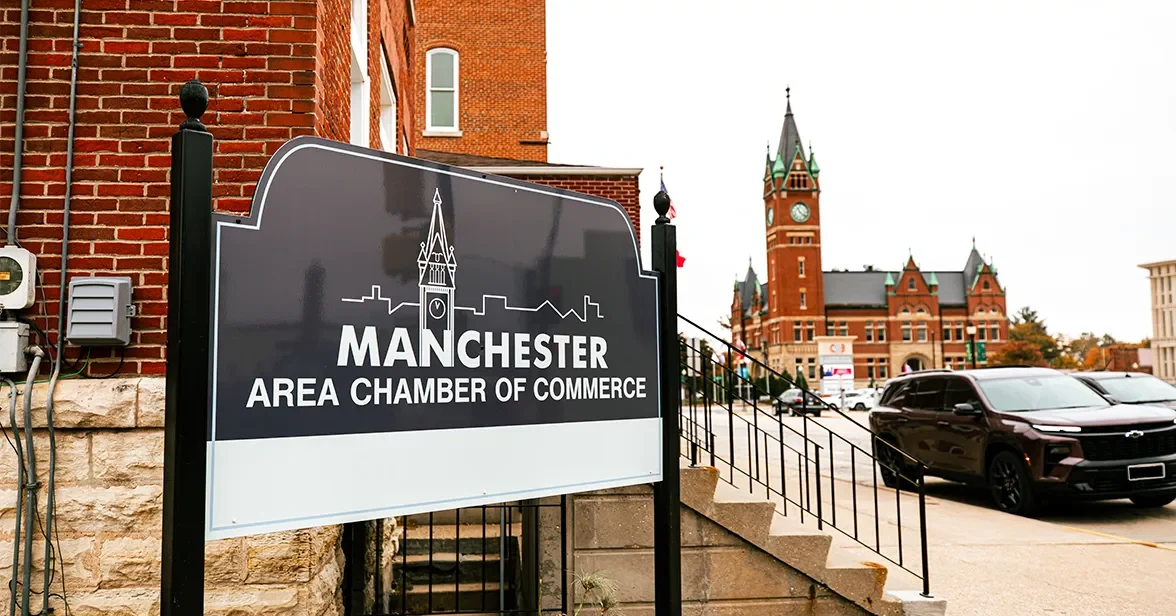
At Regional Medical Center in Manchester, Iowa — a 25-bed critical access hospital in a town of just over 5,000 people nestled near the Maquoketa River in northeast Iowa — a group of DMU graduates embodies this spirit. They deliver comprehensive care while navigating systemic challenges that threaten the health of the heartland and its residents.
Their experiences paint a vivid picture of a rewarding but complex practice, defined by deep community ties and a need for ingenuity to keep residents healthy.
What truly defines rural medicine is its fullspectrum scope. Practitioners are required to be generalists, covering a range of needs that are segmented among numerous specialists in an urban environment.
“A rural physician has to be fiercely independent, and they have to have a broad breadth of training to be able to manage everything that comes through the door,” says David Connett, DO, FACOFP (dist.), dean of DMU’s College of Osteopathic Medicine. “They’re not going to have specialists available to be able to help them in certain scenarios. It takes a very special physician to be able to do that.”

Amanda Olberding, DO’14, grew up in Earlville, Iowa, population 871, about a 13-minute drive from where she practices in Manchester. Her mother was a nurse at a clinic in Dyersville, Iowa, and seeing her in a caregiving role convinced Olberding to go into family medicine.
“It was always the goal for me,” she says. “I like seeing a wide breadth of patients, newborns up to the elderly.”
It’s not unusual for Olberding to split time between Manchester and a satellite clinic in the rural and underserved community of Strawberry Point, 17 miles away. Her day-to-day includes a “little bit of everything,” from urgent care and ER visits to obstetrics, gynecology and newborn care, a favored practice because it builds lifelong relationships in the community.
“We’re a small facility, so we follow our patients all the way through their OB care up until delivery,” she says. “I deliver my own patients — I’ve only missed a couple — and then I take care of the newborn. Along the way, I’ve gotten to know that family and the baby and then, if they have older siblings, they become patients, as well. It’s a full circle.”

Clinton Cummings, DO’11, says his role as a primary care doctor finds him covering everything from urgent care to the ER to obstetrics, too. He works in the clinic and hospital, but also makes home visits. He echoes Olberding’s commitment to full-scope practice, noting that it gives him the opportunity to perform niche procedures — like Botox, vasectomies and colposcopies — which a family practice in a larger city might not offer.
“Even before going to med school, I had wanted to do family practice, more full-scope medicine, which rural practice allows you to do,” Cummings says. “I do some unique niche things, which I don’t know if I’d be able to do in a larger town, even a larger family practice. That’s the opportunity that you get with rural medicine.”
Cummings says there’s something truly rewarding about working in a tight-knit community that he feels is unique to practicing in rural Iowa.
“It allows me to get to know my patients, not just in the clinic, but also in the community. It’s a special thing to be able to do that, to know them as neighbors.”

Similarly, Molly Olson, DO’17, a general family medicine practitioner, believes her training at DMU prepared her for this environment, emphasizing that “most of the health care in America is provided in places more like this that are like community-based hospitals and clinics.”
“I feel like we are pushed in a rural community to do absolutely as much as we can,” Olson says. “It’s my job as a primary care provider to really know my patients, to know that when I put them on this medication, it interacts with the medication they’re already on from cardiology. To manage that, I’m going to talk to your specialist and together we’re going to figure out a plan.”
This broad responsibility is intertwined with a profound level of personalized, longitudinal care that is unique to small towns. Cummings reflected on the immense reward of this, sharing: “I’ve had patients that I’ve delivered, and then I have their parents, their grandparents and their great grandparents as my patients.”

Physician Assistant Allison Berns, MSPAS’09, MHA’16, who transitioned from being RMC’s first hospitalist to a primary care provider, notes that this deep personal connection is key to quality care. She recalls catching a very subtle sign of a stroke in an established patient, which a provider who didn’t know her baseline well might not know.
“This level of familiarity, where we know their spouse, their children, their grandparents, allows for a different level of care,” she says.
The Daily Strain: Specialty Gaps and Limited Resources
Despite the rewards of personalized care, rural providers face significant systemic challenges, most notably the imbalance between resources and need. The scarcity of specialty access, all agree, is a constant daily battle.
Mental health services, in particular, have become a huge and pervasive issue for which resources are extremely limited. Providers must stretch their scope to manage conditions that would typically be referred out.
“For some of our patients who are elderly, it’s hard to travel to specialists,” Cummings says. While RMC receives some outreach from specialists in nearby cities like Cedar Rapids and Dubuque, these services are not permanent; for instance, a previously regular neurologist stopped practicing outreach.
The most severe challenge is often the logistical difficulty of caring for acutely ill patients who require a higher level of care. Olson describes the heartbreaking reality of having to keep critically ill patients in the smaller community hospital because they cannot get them transferred to an ICU or a facility with a pulmonary critical care specialist running a ventilator.
“We don’t have ready access to specialists,” Olson says. “It just feels like there’s never enough to go around.”
Another major daily barrier is transportation. For many patients, simply getting to the clinic is a major hurdle, whether due to not owning a vehicle, lacking a driver’s license or having health issues that prevent them from driving. And because these areas aren’t urban, there’s no city bus to hop on or a way to walk to the clinic. This can prevent patients from accessing necessary preventive care or follow-up appointments, undermining the providers’ efforts. To combat this, Berns relies on a social worker at the clinic who helps maintain an updated list of community resources and determines if the patient’s insurance can help cover travel costs.

Building a Sustainable Future for Rural Health
In response to these challenges, Iowa’s “Healthy Hometowns” proposal was approved by the federal Rural Health Transformation Program in December. The proposal sought $1 billion over five years to reinvent Iowa’s rural health care systems. It funds technological improvements, an expanded and sustainable workforce and new ways of coordinating care and chronic disease prevention.
Connett says programs like Healthy Hometowns are a step in the right direction, but may not go far enough to solve all ills afflicting rural health care in Iowa. He cites Medicare and Medicaid compensation as a major deterrent.
“The reimbursement for physicians in the state of Iowa is one of the lowest in the nation,” he says. “So, until that is really addressed, it’s going to still be an issue with the physicians to be deployed in these rural environments.”
Connett says DMU takes pride in the fact that 50% of COM graduates enter primary care, and last year, 32 graduates stayed in Iowa to complete their residencies. Those are numbers other medical schools can’t match.
“We dwarf other schools in their ability to produce primary care physicians, but also those who want to stay in the community,” Connett says. “If they came from here, went to medical school here and then did a residency here, they have greater than a 67% chance of staying here.”
3,971 DMU Alumni in Iowa*
College of Health Sciences: 2,208
College of Osteopathic Medicine: 1,714
College of Podiatric Medicine and Surgery: 230
* Individual College Totals Include Dual Degrees

Connett says that the cost of medical school is also deterring students from practicing in rural communities. While the cost of living might be cheaper in smaller towns and cities, repaying student loan debt can outweigh the savings.
“The biggest concern that all students have is student loan indebtedness,” Connett says. “Anything we can do to help create incentives for them to stay, and then wipe their student loan indebtedness, will be beneficial.”
Olson, a graduate of the Rural Medical Educational Pathway scholarship program, agrees that financial incentives are necessary for students who want to practice rural health care. Cummings stresses the need for more residency spots for family medicine and prioritized loan repayment and loan forgiveness for those on a rural medicine track. Berns urges the medical community to entice more providers to serve as preceptors in rural clinics.
“A lot of programs will not let students do rural rotations because they don’t have enough preceptors to go around,” Berns says. “I think it’s such a vital part of training that you’re in those rural areas. You can see the difference it makes. Even if they’re not going to work in the hospital, if they’re in a family practice clinic, they need to know what they are exposed to out here.”
The Manchester providers all agree that fostering the next generation is critical to overcoming the current provider shortages. A crucial piece of advice for current medical students is to “go out there and rotate in rural Iowa.”
Ultimately, the commitment to rural medicine, while rewarding, requires a strong, supportive framework to be sustainable. Olson warns that the work cannot be done by a single “rural doc of 1960” who is on call 24 hours a day; rather, it requires a “supportive practice environment” with a collaborative team of intelligent colleagues.
The Manchester team, unified by a shared educational background and a dedication to their community, exemplifies this successful model — a small core of highly trained generalists fighting daily to ensure that specialized quality care remains accessible in the heart of rural America.

A Calling to Community: Practicing Rural Health Care
President of UnityPoint Health – Fort Dodge, Leah Glasgo, MHA’02, embodies the spirit of dedication required for rural health care leadership. Having spent her entire career in Iowa and over 12 years with UnityPoint Health, Glasgo provides a unique perspective on the joys, challenges and instrumental role of smaller institutions in community well-being.
Glasgo’s career trajectory began with an early desire to be a nurse, inspired by her aunt. This resolve was strengthened while caring for her grandfather during his cancer treatments. “I really felt like that was my calling,” she says of becoming a nurse. “I’ve always had that caregiving kind of spirit within me.”
After receiving a bachelor of science in nursing degree from the University of Nebraska Medical Center and working as an OB nurse, she was inspired to pursue a Master of Health Care Administration at DMU. She found the curriculum, especially the focus on the business of health care, highly beneficial. A key foundational principle she took from her instructors was, “If you take care of the patient, if you take care of the people, the rest will come.” Glasgo’s home base, UnityPoint Health – Fort Dodge, is a 49-bed hospital, serving a vast area encompassing six to eight counties and receiving transfers from up to 60 miles away. The institution plays a vital role in providing a crucial stop for patients before they move onto a higher level of care, offering services like a heart center, trauma care and oncology. The biggest challenges in serving this large rural population, Glasgo says, are transportation, social determinants of health and workforce shortages, similar sentiments to those shared by the Manchester team.
Advocating for Rural America
Glasgo also serves on the board of the American Hospital Association, a role that provides her an opportunity to advocate for health care in rural America by addressing the complex rules and regulations, and showcasing the unique challenges and triumphs of smaller health care institutions.
“To have an opportunity to advocate for things that are happening right here, and to be able to showcase the challenges and the joys of providing health care in rural America, I’m really excited to be able to bring that voice,” she says.
For Glasgo, the greatest personal reward is living out her calling to walk alongside friends and neighbors, helping them efficiently navigate the health care system and providing compassionate care right where they live.
“You have to know a little bit about everything, because you’re caring for just about everything,” she says. “But the relationships that you’re able to build, taking care of your friends and neighbors, are second to none.”