
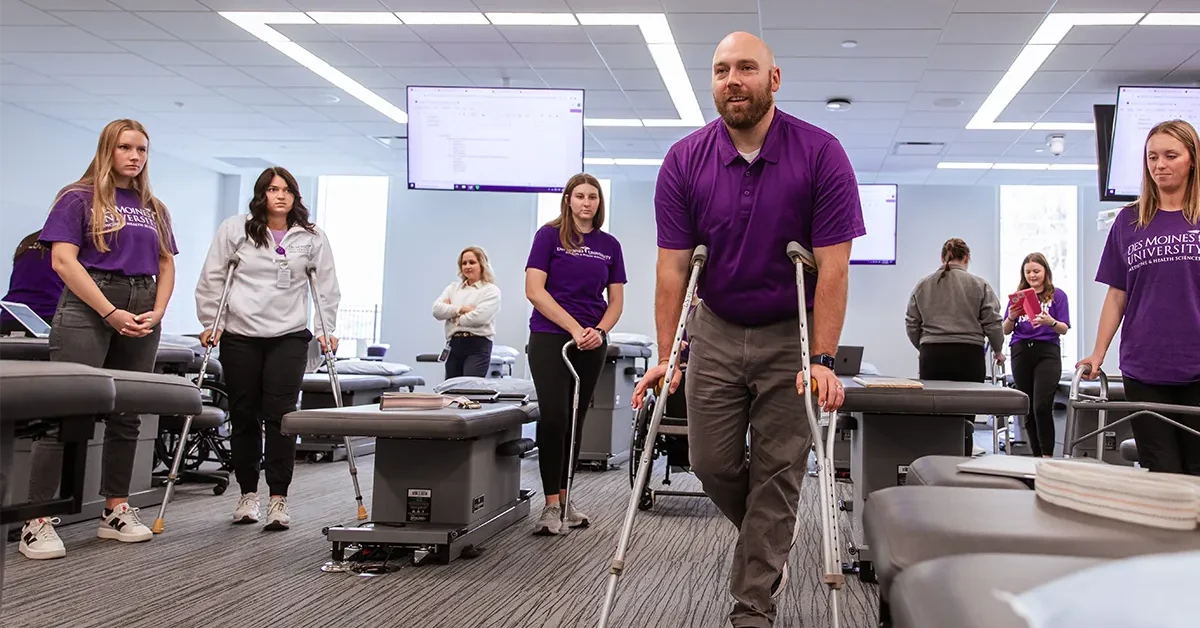

The Doctor of Occupational Therapy program at Des Moines University Medicine and Health Sciences has added four concentration areas to prepare students for specialized career paths while helping meet the increasing demand for occupational therapists across the country and in Iowa, where workforce shortages are especially pronounced in hospitals, clinics, schools and rural communities.
Students in the OTD program can choose from one of four concentration areas: general practice, pediatrics, rehabilitation and wellness.
“With these concentrations, we’re giving students the opportunity to focus a portion of their education in areas that align with their interests and career goals while still receiving the broad preparation needed to enter the profession of occupational therapy,” says Diana Feldhacker, OTD, PhD, OTR/L, BCPR, who serves as program director and department chair. “These concentrations provide students with a way to personalize their educational experience while remaining grounded in the full scope of occupational therapy practice, helping prepare them to make a meaningful impact in the communities they will serve.”
Each concentration is embedded within the curriculum and allows students to personalize their education through research, specialized coursework, experiential learning, fieldwork and a doctoral capstone project, while still receiving the comprehensive preparation required to become an entry-level occupational therapist.
The General Practice concentration is designed for students whose interests are broad or still evolving. It offers maximum flexibility throughout the OTD program, allowing students to explore a variety of occupational therapy practice areas while shaping their fieldwork and capstone experiences around their individual interests.
The Pediatrics concentration emphasizes occupational therapy services that support the development, participation and well-being of infants, children, adolescents and their families. Students explore topics such as child development, family-centered care, school-based practice, play, participation and pediatric intervention across home, school, health care and community settings. This concentration may appeal to students interested in careers working with our youngest population.
The Rehabilitation concentration focuses on interventions that support recovery, function, adaptation and participation for individuals experiencing illness, injury, disability or changes in health status. It may be a good fit for students interested in rehabilitation-focused practice across settings such as inpatient rehabilitation, outpatient therapy, acute care, neurological rehabilitation and community-based care.
The Wellness concentration explores how occupational therapists can promote health, prevent injury and support meaningful participation across populations and communities. The concentration may appeal to students interested in community health initiatives, prevention programs, workplace wellness and population-based approaches to care.
Through these new concentration areas, DMU is helping shape the next generation of occupational therapists, empowering graduates to pursue their passions while addressing critical workforce needs across the profession.
For more information, see our OTD Concentrations page.