Clinicals stretch medical students mentally, physically, emotionally and spiritually. From unexpected patient encounters to lessons learned by observing preceptors, each rotation shapes or refines the student’s personalized approach to patient care.
“In the hectic flurry of rotations, I found the most fulfillment in listening to the stories of my patients,” says Subeksha Sharma, DO’27. “This, more than anything else, is what motivated me to pursue medicine in the first place.”
Des Moines University Medicine and Health Sciences’ behavioral health faculty knows there is power in students sharing their stories. They pursued and secured an American Association of Colleges of Osteopathic Medicine grant to research how participation in compassion-focused storytelling affects a student’s ability to reflect on their own practice and increase their overall level of compassion.
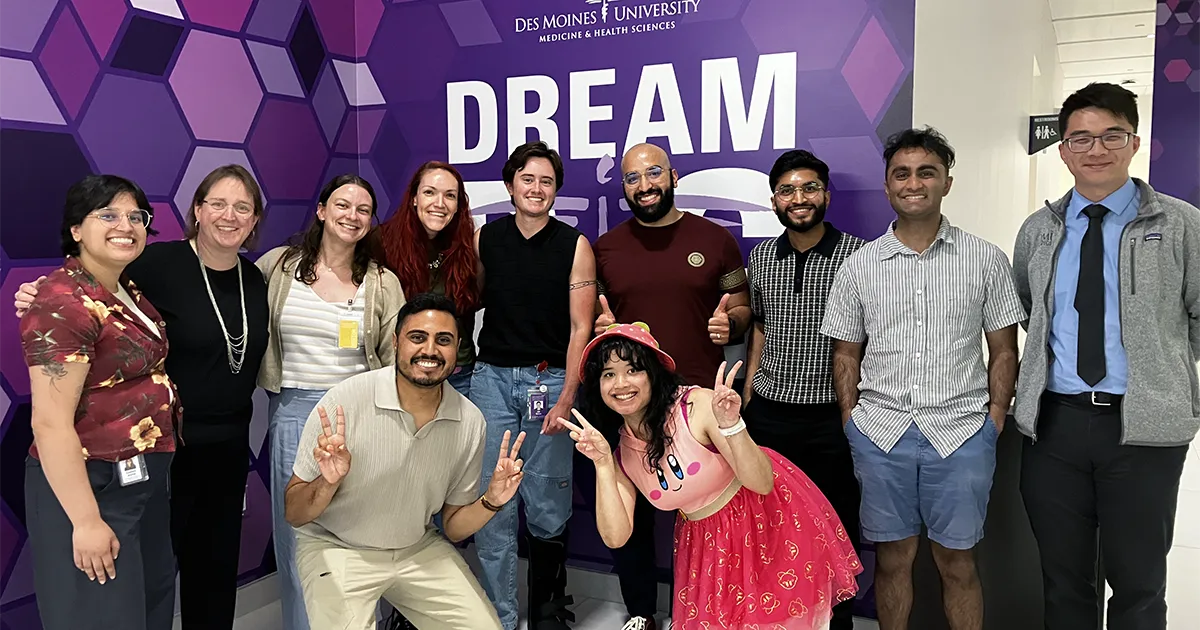
“During rotations, our DO students who are placed all around the country can feel more disconnected from their classmates and DMU,” says Lisa Streyffeler, PhD, chair and associate professor in behavioral medicine, medical humanities and bioethics. “So, when they come back to campus at the end of their third year, we wanted to offer them an opportunity to reconnect with one another and share how the year impacted them, and in particular, their sense of compassion.”
AACOM’s inaugural Compassionate Community Grant provided funding for the students to pair with storytelling coaches from the Iowa Storytellers Project. The coaches helped students protect patients’ privacy by changing names and identifying details, then transform their most memorable rotation experiences into clear, concise and compelling stories.
“In the hospital, it can sometimes be difficult to separate your patient from their diagnosis,” Sharma says. “Working on storytellers, I was reminded of what matters most to me: seeing my patients as humans first rather than a problem to solve. I hope that this experience will help me continue to lead with compassion in my future practice.”
From poetry about anesthesia, cardiology and a C-section to unexpectedly finding a home in the Cook County Medical Examiner’s Office, each story told emphasized how rotations help DMU students grow their clinical skills and confidence and eventually find their match in medicine.
“I loved hearing all my peers share their stories,” Sharma adds. “I was surprised how we all had such varied experiences on rotations but ultimately, we were all touched by the human experience in the same ways.”
Josi Barscz, DO’27, another student who participated in the project, wholeheartedly agrees.
“Hearing that others had faltered in their experiences or withstood difficult times demonstrated to me that none of us are as perfect as the front we try to show others,” they say. “Patients expect us to be faultless as physicians. Being able to see each other for who we truly are, mistakes and all, helps us have more compassion for other health care team members. I am glad I was able to be exposed to some of the insight that people bring to their patient encounters. There is a doctor for each type of patient, and we are all needed in taking care of many different types of people with our different approaches.”