

Des Moines University Medicine and Health Sciences faculty member Elitsa Ananieva, PhD, has led a study that could help improve the effectiveness of cancer immunotherapies by enhancing the ability of the body’s T cells to sustain their fight against cancer.
Published recently in the British Journal of Cancer, the research demonstrates that reprogramming the internal metabolism of T cells — the immune system’s primary cancer-fighting cells — can significantly improve their ability to function within tumors. In mouse models, the approach reduced tumor growth by approximately 75%.
Ananieva, professor of biochemistry and nutrition at DMU, designed and directed the study, which was supported by funding from DMU’s Elsie Lee Cancer Research Fund and the National Cancer Institute, part of the National Institutes of Health.
“T cells are remarkably powerful, but when they enter the tumor microenvironment, they often become exhausted and lose the energy needed to continue fighting,” Ananieva says. “Our research focuses on helping these cells maintain their function so they can remain effective for longer periods of time.”
The findings have important implications for cancer immunotherapy, particularly CAR T-cell therapy. This increasingly used treatment involves collecting a patient’s immune cells, modifying them in a laboratory and returning them to the body to target cancer.
While many current approaches focus on changing molecules found on the surface of T cells, Ananieva’s research examines how to alter the cells’ internal programming to improve energy production and long-term performance.
“Our work addresses what happens inside these cells after they reach the tumor,” Ananieva says. “By helping T cells sustain their metabolic activity, we may be able to improve their ability to survive, persist and continue attacking cancer.”
The research is already attracting interest beyond the laboratory. Ananieva is collaborating with pharmaceutical industry partners who are applying the study’s findings to human immune cells, an important step toward potential clinical applications.
“It’s incredibly rewarding to see that such hard, focused work can lead to outcomes that may one day serve as a foundation for improving cancer treatment,” she says.
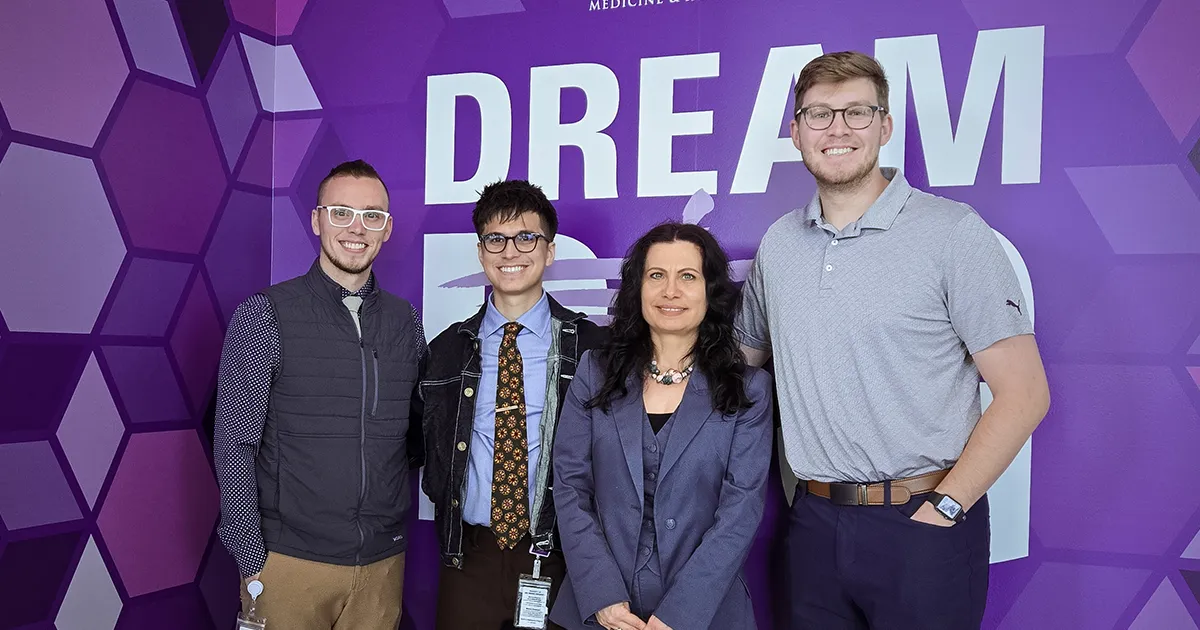
In addition to its scientific impact, the project provided valuable research opportunities for DMU students. Throughout more than a decade of studying T-cell biology, Ananieva has mentored more than 50 medical, pre-doctoral and master’s in biomedical sciences students who contributed to her research program. Among them are lead experimental authors Tanner Wetzel, DO’27, PhD’25, and Christie Adam, MSBS’21, both of whom have continued their careers in medicine and advanced training.
For Ananieva, developing future physician-scientists is among the most meaningful outcomes of her work.
“Seeing their enthusiasm and knowing I can contribute, even in a small way, to their journey toward becoming physicians — many of them future oncologists — is probably the greatest reward I’ve experienced,” she says. “It’s especially fulfilling when they come back later, after specializing or entering fellowships, and share that working with me played a role in inspiring their path.”
The study highlights the growing role of metabolic research in cancer treatment and shows how discoveries into immune cell biology could shape future immunotherapies.
“Dr. Ananieva’s work is a great example of how discovery-driven research can improve human health,” says Pravin Mishra, PhD, MBA, chief research officer at DMU. “The potential to enhance the effectiveness of cancer immunotherapy is significant, and it’s especially exciting to see this work progressing from the laboratory toward applications that could one day benefit patients. This study also reflects DMU’s commitment to high-impact research while preparing future leaders in health care and science.”