
In the Simulation Center at Des Moines University Medicine and Health Sciences, future clinicians can master complex skills before ever picking up a scalpel.
In 2025, DMU’s Simulation Center began implementing new virtual reality technology with the Doctor of Podiatric Medicine program.
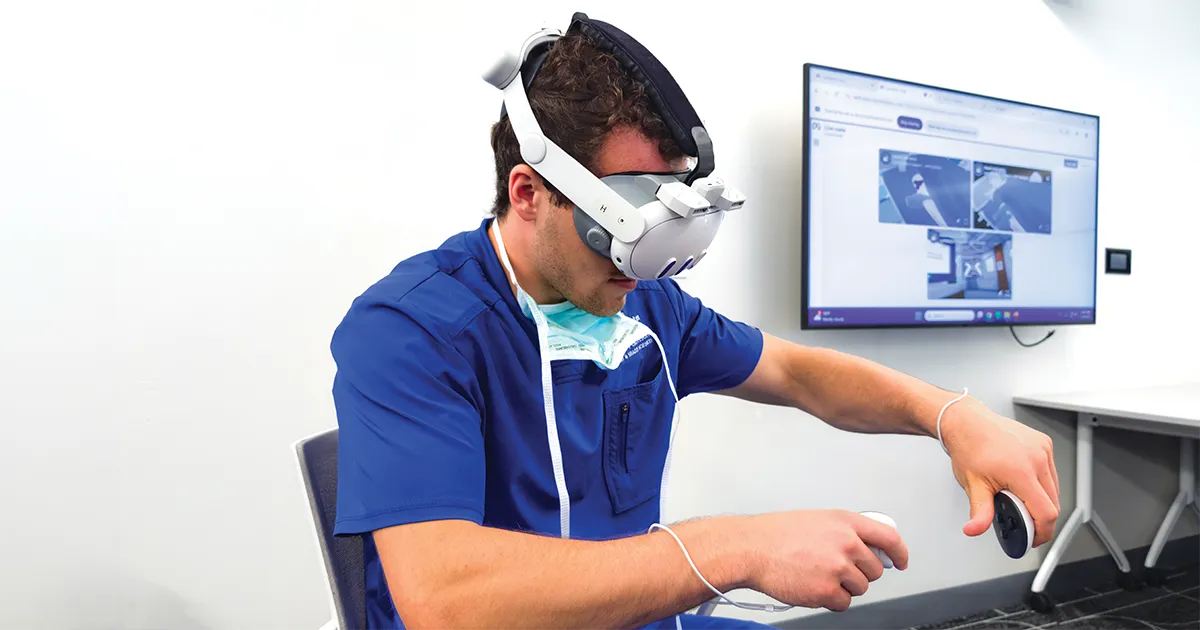
Using Meta Oculus 3 headsets, students practice surgical and task-training skills, like IV insertion or foot fracture repair, in an interactive environment with all the equipment they’ll encounter in an operating room.
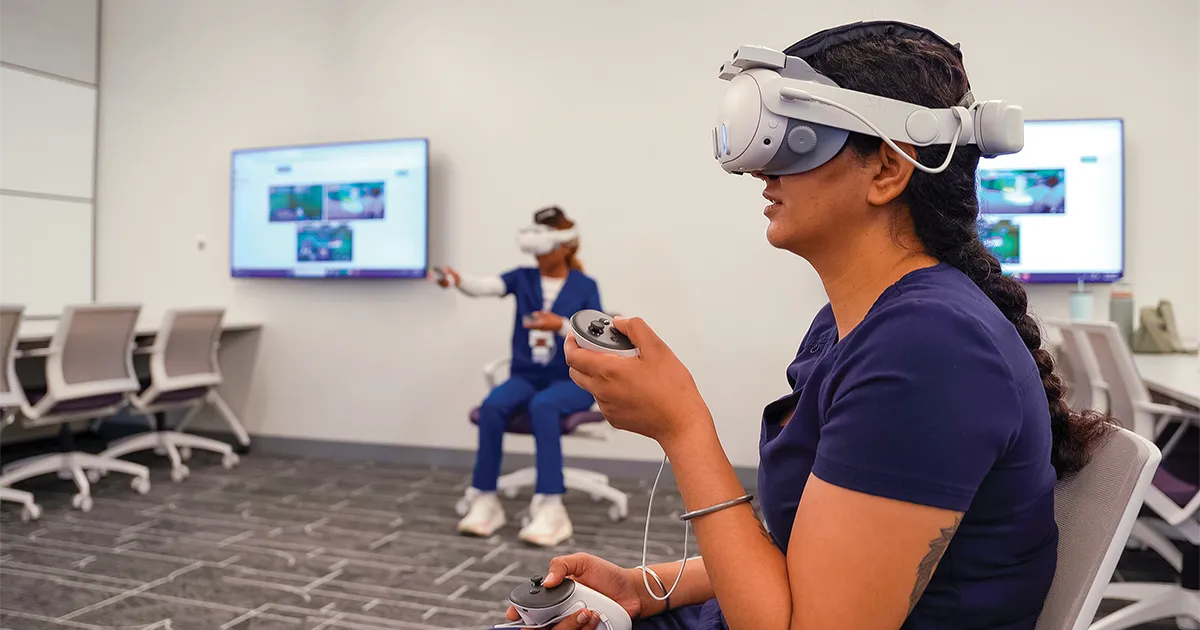
“The college is excited to include VR headsets in our curriculum because it provides an immersive, risk-free opportunity for students to practice procedures, thus improving skills and precision,” says Kevin Smith, DPM’95, PhD, dean of the College of Podiatric Medicine and Surgery. “When we were approached by the simulation center to consider using this technology, we jumped at the chance to implement because it provides an opportunity to separate our college from our peer institutions.”
Kimberley Patterson, MS, CHSE, director of the simulation center, notes that VR is especially helpful for learning procedural steps and getting immediate feedback — this is what you did correctly, and this is what you didn’t do — before entering a real-world situation.
VR is also valuable for surgical training.
“It’s challenging to give students as much surgical experience as they want because of the costs and the equipment or limitations in anatomy training time,” Patterson says. “VR doesn’t replace anything, but it does offer students more practice opportunities, especially on learning the steps.”
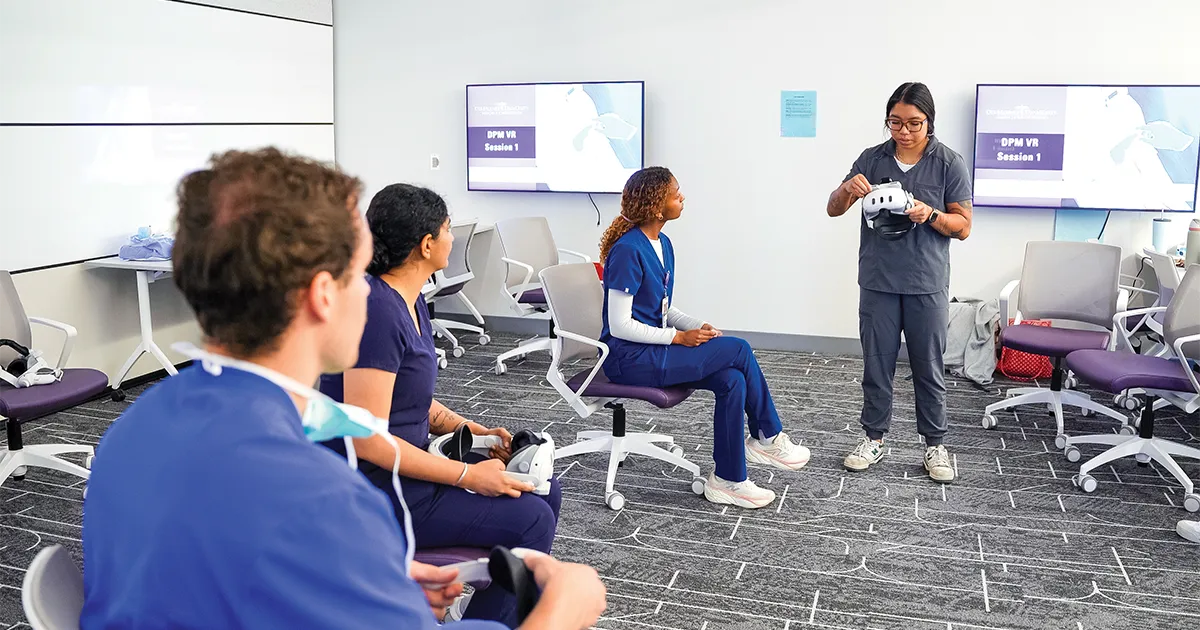
Students are eager for more opportunities to practice, and the headsets allow them to do just that. After initial training, they can independently return to the simulation center to refine their skills without requiring additional faculty time.
While only the DPM program has integrated VR so far, future possibilities abound. Students could use VR to practice interviewing patients before their first standardized patient event or to navigate complex cases such as depression, agitation or dementia. VR also enables scenarios that are difficult to simulate in person, such as postpartum bleeds or pediatric emergencies.
There’s potential, too, for courses like the ultrasound elective, where students use head and torso trainers with simulated cardiac, abdominal and OB cases. Microsoft HoloLens 2, a similar headset equipped with augmented reality, can connect multiple students to one simulation while faculty demonstrate techniques in real time.
While the possibilities are endless, intentionality remains key.
“With any simulation technology, we don’t want to use it just to use it,” Patterson says. “We want to be thoughtful about what our needs and gaps are, and what is the best type of simulation methodology to help achieve those gaps. I do think that if we’re thoughtful about VR, it can be a nice way to augment the students’ learning and choose the right types of software that will help achieve the learning outcomes they need.”