
Dire Wolves Return and Spark Scientific Debate
In April 2025, a headline in The New York Times proclaimed, “Scientists Revive the Dire Wolf or Something Close,” with news that Colossal Laboratories and Biosciences, a deextinction company, had essentially brought an apex predator back to life.
Using ancient, preserved DNA from a dire wolf fossil, paired with that of a gray wolf, Colossal engineered the rebirth of a species that last roamed North and South America more than 12,000 years ago. Three pups named Remus, Romulus and Khaleesi (the latter after a popular character in the HBO TV series, “Game of Thrones”) were born via surrogate and live in captivity at an undisclosed wildlife facility in the United States.
The news ignited considerable discussion within the scientific community and beyond. When Julie Meachen, Ph.D., professor of anatomy at Des Moines University Medicine and Health Sciences, heard news of the dire wolf’s return to civilization, she was skeptical. For several years, her work has centered around the study of wolves, particularly dire wolves. While the public response was largely enthusiastic, Meachen remained cautiously optimistic regarding the implications of such ambitious rewilding efforts.
“I’m not a huge fan of rewilding in general, at least not of Pleistocene species,” says Meachen, whose expertise lies in the paleoecology, anatomy and morphology of Ice Age species. “It’s not a straightforward thing to do, and it takes a lot of energy and money to do something like this, so I wanted to know why.”
Meachen recalls that two years earlier, a friend, Beth Shapiro, Colossal’s chief scientist, reached out with questions about the best methods for gathering ancient DNA, extracting bone samples without damaging invaluable skull specimens and acquiring permissions to sample a specimen. Despite her input, Meachen was kept in the dark about Colossal’s ultimate goal of creating live dire wolves until approximately a week before the public announcement.
“I had an inkling,” she says. “It’s Colossal. I knew what they were up to. I know what their ultimate goal is,” she says, but emphasizes that the company never explicitly confirmed their intention to clone dire wolves.
Moreover, Meachen believes that while closely related, their creation is not a true dire wolf. “I don’t think they are actually dire wolves,” Meachen told ABC News in April. “What we had is something new — we have a mostly gray wolf that looks like a dire wolf.”

The speed of the project was particularly striking to Meachen. It took less than two years from the initial DNA collection in May 2023 to the announcement of the dire wolves’ creation. “That’s incredibly fast for science,” she says. “A year and eight months is unheard of.”
Looking ahead, Colossal has hinted at other species for de-extinction, including the thylacine (also known as the marsupial wolf), the dodo and the woolly mammoth. Meachen expressed enthusiasm for the thylacine and the passenger pigeon, both of which went extinct relatively recently, making their reintegration into ecosystems potentially more feasible. However, she remains cautious about the woolly mammoth, questioning where such a large animal would live in a world increasingly dominated by human activity
Focus on Conservation and Funding for Research
Beyond the spectacle of de-extinction, Meachen highlights Colossal’s concurrent efforts in conservation. The same genetic techniques used for bringing back extinct animals are being employed to introduce genetic variation into living species facing extinction due to habitat loss and reduced genetic diversity. This application, she believes, holds significant promise for bolstering endangered populations.
Meachen has concerns about the broader implications of declining research funding in the United States. Cutting funding for scientific research, particularly “research for research’s sake,” undermines the nation’s capacity for technological advancement and problem-solving, she says.
“You can’t just look at a piece of research and say, ‘that’s useless’ because you don’t actually know what’s going to come from it,” she emphasizes. She fears that underfunding science will lead to a brain drain, with scientists seeking opportunities in countries like China, which heavily invests in research. This could leave the U.S. uncompetitive.
Outside of the Box
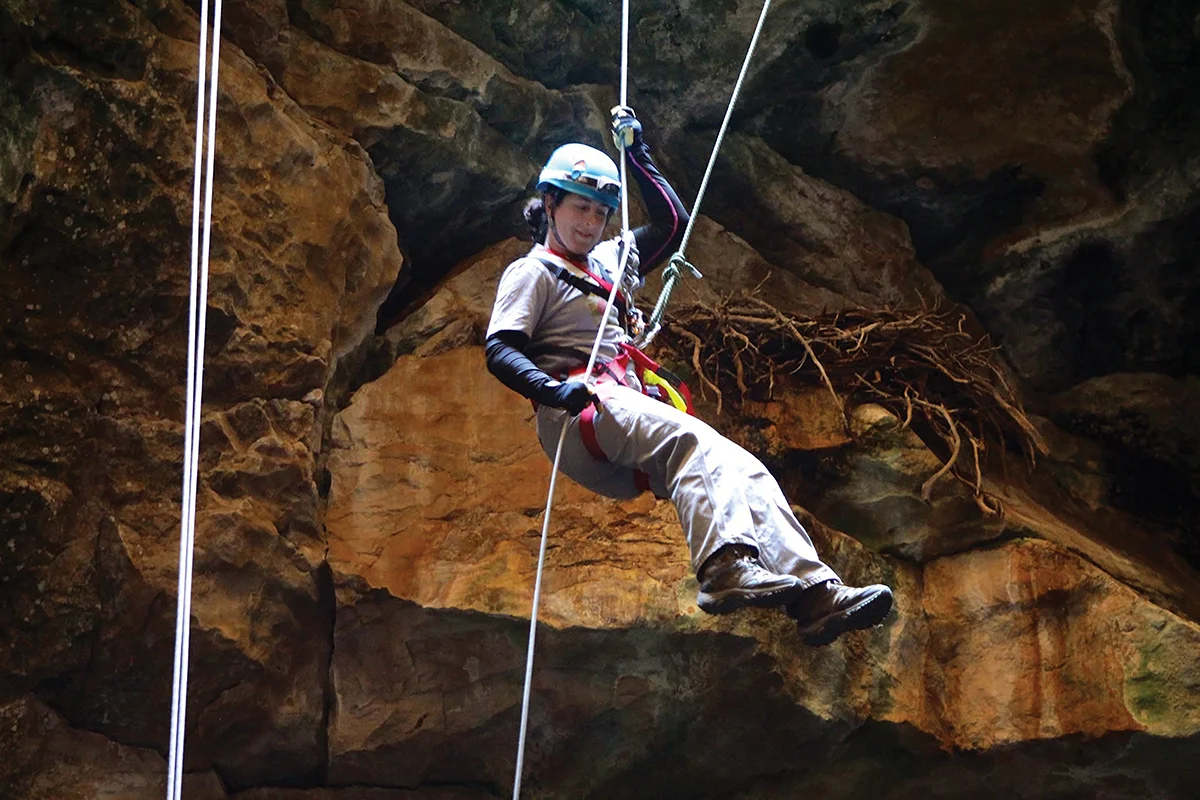
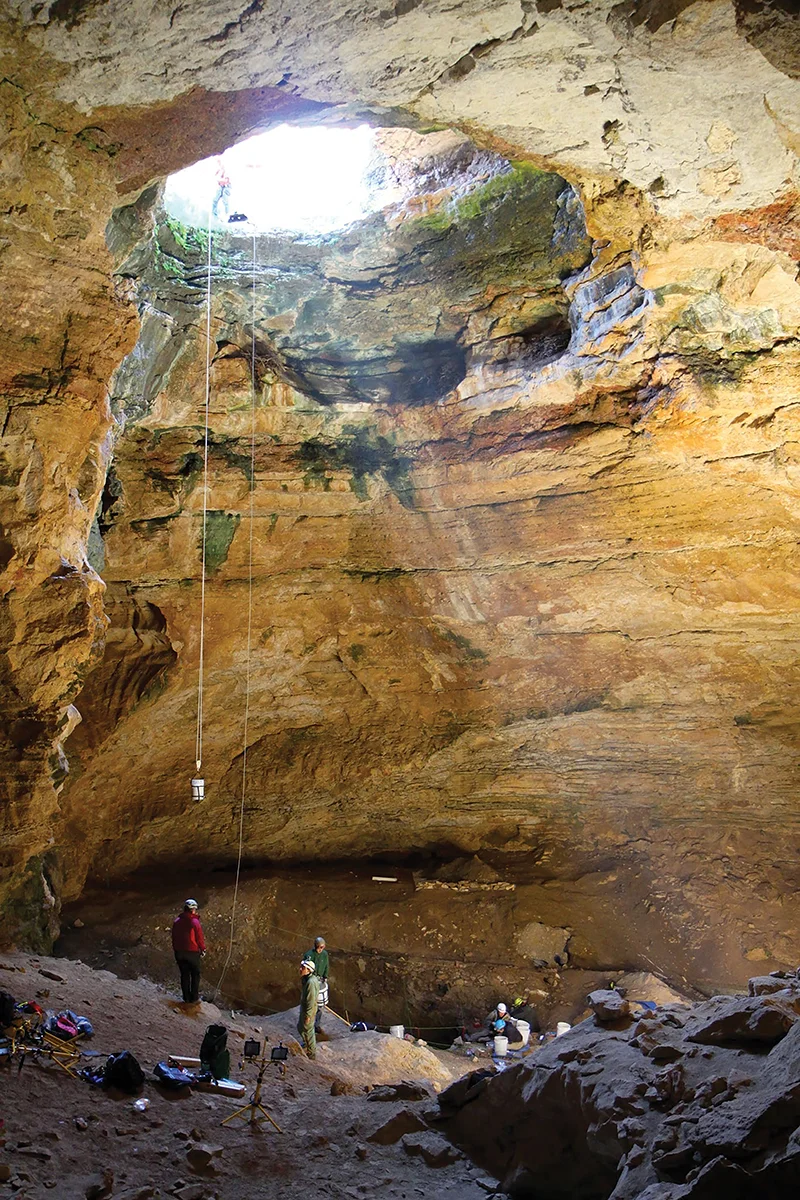
As for her own work, Meachen continues to dedicate her career to learning all she can about Ice Age species. Her ongoing research at the Natural Trap Cave fossil site in northern Wyoming was recently featured in the June issue of Smithsonian magazine and showcases her passion for paleontology, particularly for ancient carnivores. Meachen says her interest stems from her undergraduate days, where she was captivated by saber-toothed cats and eventually pursued a Ph.D. focusing on big carnivores. Her unique blend of expertise in anatomy and ancient animals makes her a valuable voice in the landscape of de-extinction and conservation science.
It is also applicable to other areas of science, says Lindsay Mahaney, D.O.’26. Mahaney was one of several DMU students who’ve worked with Meachen in the field, first at Rancho La Brea tar pits and later at the Natural Trap Cave in Wyoming. The research, she admits, honed her attention to detail and investigative skills, crucial for her career path from forensic anthropology to forensic pathology and eventually to OB-GYN.
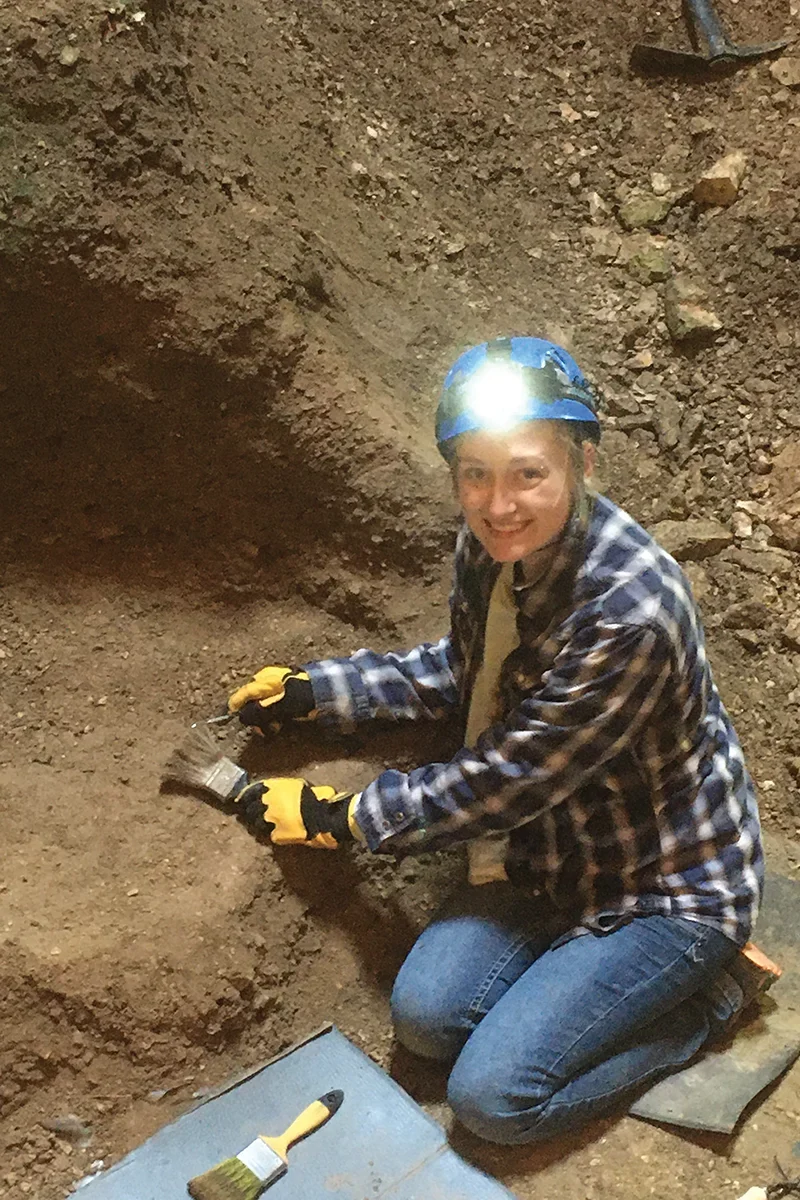
“The way I see it, researchers and doctors are pretty similar in that we have to have a very systematic way of thinking. We have a question that we’re trying to answer, and then we look at all the evidence in front of us to find out what the answer could be,” Mahaney says. “When I first started working with Dr. Meachen, I didn’t know that I wanted to go to medical school. I thought that I wanted to go into forensic anthropology, but I didn’t realize at the time that a lot of the skills that I did learn through that research would actually play a pretty important role to what I do a lot now with clinical sciences.”
Mahaney says Meachen’s influence and mentorship will benefit her for years to come, and she’s grateful for the experience.
“She’s taught me so much,” Mahaney says. “After years of doing this, I can usually look at a bone and be like, ‘Okay, this was probably an herbivore because of the shape of the tooth,’ or ‘It was a molar from probably this animal.’ She (Meachen) can take a look at a little piece of bone and say, ‘Oh, it’s probably this cranial bone from this era, from this sub-species of something,’ and I just think that that’s incredible.”
Research Powerhouse
DMU maintains a robust research enterprise, actively driving innovation and contributing to advancements in medical science and education. Meachen’s story is just one powerful example of the groundbreaking work and thinking happening here.
It’s not every day that a scientist and professor from Iowa makes the national news, but that’s exactly what happened to Julie Meachen this spring.
When the news broke about the dire wolf pups, Meachen, who co-authored a 2021 research paper on the evolutionary history of the dire wolf, was the person media outlets like The Washington Post, The New York Times, ABC News, Science News and even Rolling Stone turned to for a quote.