
Your Degree, Your Way
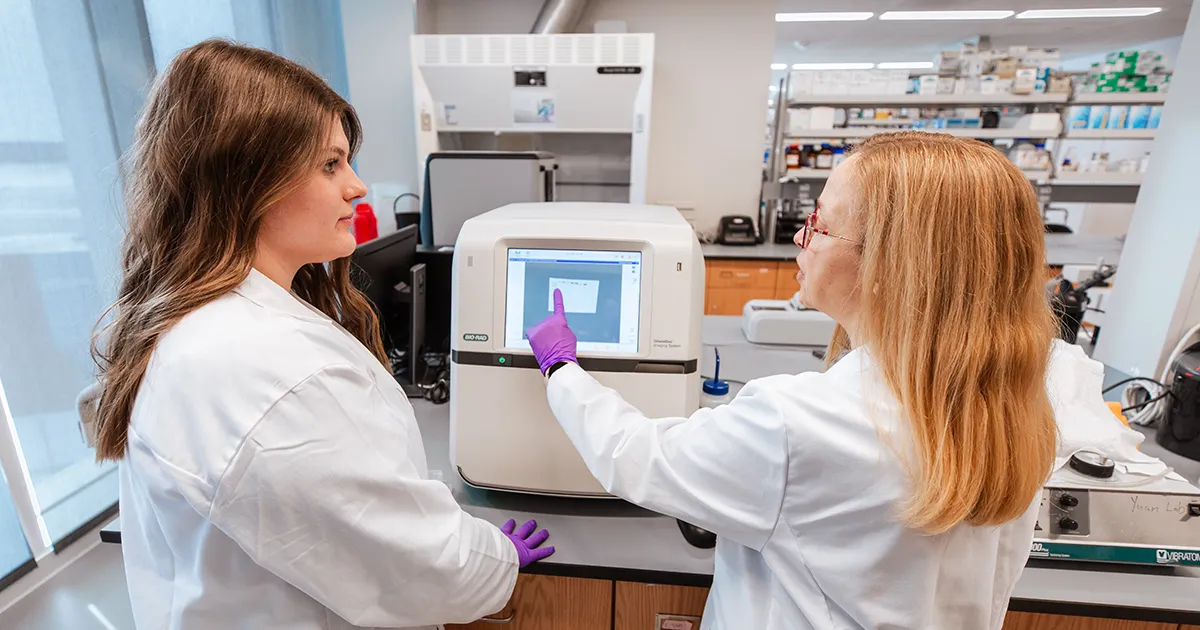
As a student in the Master of Science in Biomedical Sciences program at Des Moines University Medicine and Health Sciences, you’ll dive deep into anatomy, biochemistry and physiology, with research opportunities in cancer, immunology, microbiology, virology and pharmacology.
In your first year, you’ll choose a lab and complete most of your coursework. Thesis students spend their second year focused on research and writing a thesis.
No matter the path, you’ll collaborate closely with peers and faculty who are committed to your success.
Choose Your Path: Non-Thesis or Thesis
The non-thesis track is designed to be completed in 12 months. The thesis track is designed to be completed in 22 months, with flexible part-time options available. Each track has a different emphasis and prepares you for careers in academic teaching, research or further graduate study.
Non-Thesis Track (32 credit hours)
Take advanced coursework alongside medical students and gain research experience tailored to your goals.
Scroll horizontally to see all columns.
|
Fall Term (August - December) |
Spring Term (January - May) |
Summer Term (June - July) |
|
|---|---|---|---|
| Year 1 |
Biochemistry/Molecular Genetics (4.5 credits) Introduction to Anatomy (6 credits) Fundamentals of Learning (0.5 credits) Frontiers in Biomedical Research (2.5 credits) |
Medical Physiology (6 credits) Introduction to Research (1 credit) Research Compliance & Laboratory Safety (0.5 credits) Responsible Conduct Biomedical Research (1 credit) Research (2.5 credits) Critical Analysis of Biomedical Research (1 credit) |
Intro to Biostatistics & Data Analysis (2 credits) Research (3 credits) Scientific Communications (1.5 credits) |
Total Credits: 32
Research Credits: 5.5
Thesis Track (46 credit hours, including 14.5 research credits)
Conduct in-depth research on a topic of your choice and defend your thesis in your final term.
Scroll horizontally to see all columns.
|
Fall Term (August - December) |
Spring Term (January - May) |
Summer Term (June - July) |
|
|---|---|---|---|
| Year 1 |
Introduction to Anatomy (6 credits) Fundamentals of Learning (0.5 credits) Frontiers in Biomedical Research (2.5 credits) |
Medical Physiology (6 credits) Introduction to Research (1 credit) Research Compliance & Laboratory Safety (0.5 credits) Responsible Conduct Biomedical Research (1 credit) Research (2.5 credits) Critical Analysis of Biomedical Research (1 credit) |
Intro to Biostatistics & Data Analysis (2 credits) Research (3 credits) Scientific Communications (1.5 credits) |
| Year 2 |
Biochemistry/Molecular Genetics (4.5 credits) Thesis (1 credit) Presentation of Scientific Information (1 credit) Research (3 credits) |
Thesis (3 credits) Research (6 credits) |
|
Total Credits: 46
Research Credits: 14.5
Thesis Credits: 4.0
Research that Matters
At DMU, your research makes a difference. The MSBS program connects your passion for science with expert investigators working across academia, government, pharmaceuticals and biotech. You’ll graduate with the knowledge and hands-on experience to thrive as a scientist, educator, lab manager or advanced technician.
What you’ll gain:
- Mentorship: One-on-one guidance from experienced faculty who support your growth.
- Research Opportunities: Dive into impactful studies in cancer, immunology, microbiology, virology, pharmacology and physiology.
- Conference Travel: Receive financial support to present your research at national conferences.
- Publications: Contribute to peer-reviewed journals like the “Journal of Biological Chemistry,” “Journal of Virology” and “Frontiers in Physiology and Immunology.”
- Financial Support: Access graduate assistantships and grant-funded opportunities to support your education.
Expand Your Impact With Dual Degrees
Combine your clinical training with advanced biomedical science to broaden your expertise and career options. DMU offers two flexible pathways to earn both your clinical doctorate and a Master of Science in Biomedical Sciences.
Option 1: DO + MSBS — Start Before You Matriculate
Begin your research the summer before starting your Doctor of Osteopathic Medicine program and complete your master’s degree without extending your graduation timeline.
- Complete the dual degree in four years and one summer
- Start your research project early and integrate it throughout your clinical training
- Finish with a 4-6 week research experience in your fourth year
How to Apply
Apply to the MSBS program the summer before entering the DO program. If accepted, you’ll begin coursework in June and complete 25.5-26 credit hours toward the master’s degree.
Option 2: DO or DPM + MSBS — Add a Research Year
Already enrolled in the DO or Doctor of Podiatric Medicine program? You can apply during your first year and add a dedicated research year between your second and third years.
- Complete the master’s degree with an additional year of study
- Focus on your research and thesis before starting clinical clerkships
- Earn both degrees with deeper scientific training and research experience
How to Apply
Apply during your first year of the clinical program. If accepted, you’ll begin MSBS coursework the following fall and complete up to 23 credit hours before starting your research year.
University Partnerships
Through partnerships with select universities and colleges in the health sciences, DMU offers you the opportunity for guaranteed interviews to enroll in the MSBS program — opening the door for you to take the next step toward master’s-level research training in the biomedical sciences.